
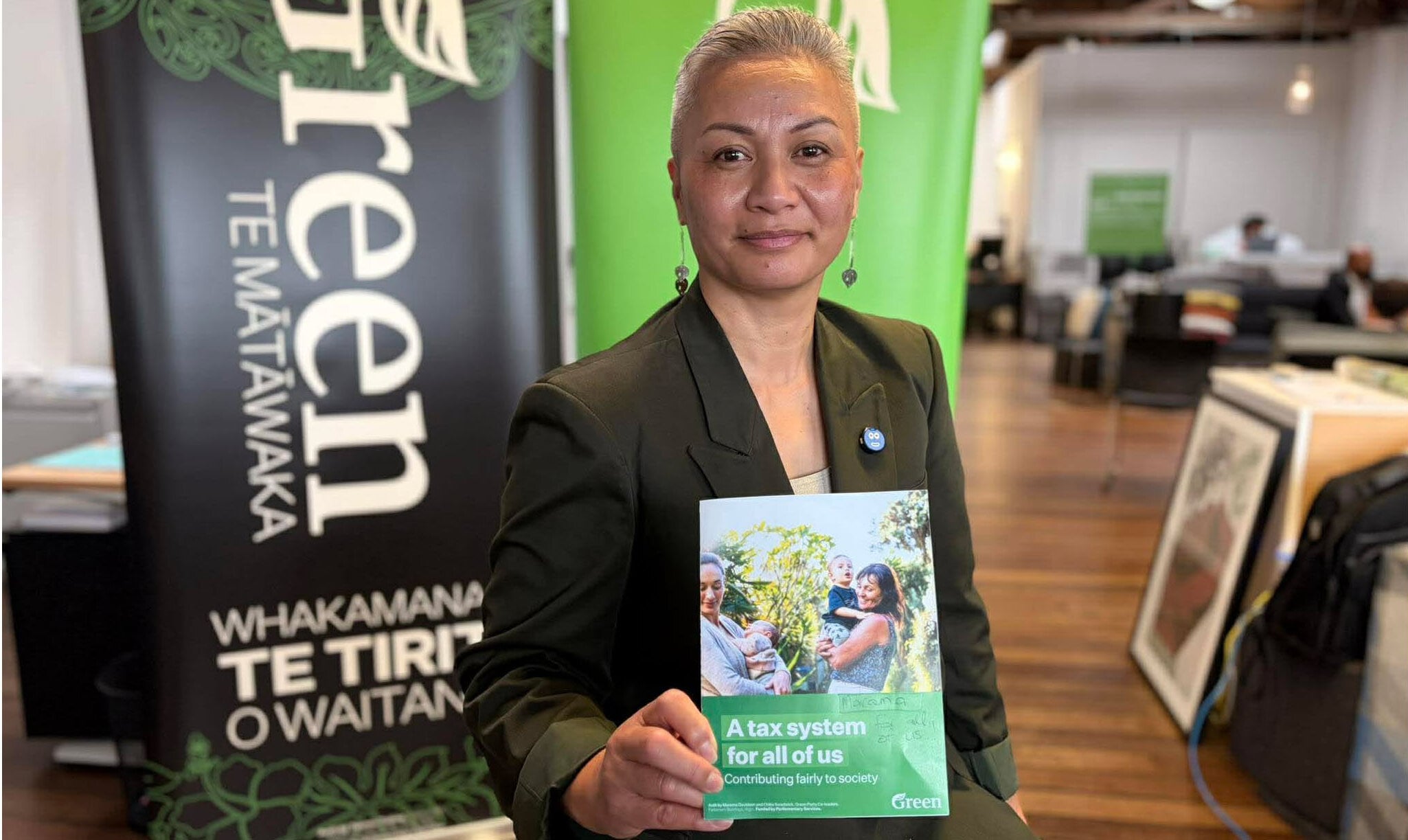

The Green Party has put tax at the centre of its 2026 election pitch, announcing a plan it says would make the super-rich and major corporates pay more, while cutting income tax for 96 percent of New Zealanders.
The policy, titled A tax system for all of us, would introduce a 2.5 percent tax on net assets above $10 million, excluding the family home. It would also create a capital acquisitions tax on assets and gifts received over $1 million, with family homes and family farms exempt.
Green Party co-leader Chlöe Swarbrick said the current system was unfair and allowed the wealthiest New Zealanders and multinational companies to avoid paying their fair share.
“All New Zealanders deserve the opportunity to thrive,” Swarbrick said. She said the policy would tackle inequality and “corporate greed” while putting more money into the pockets of most workers.
The Greens also want to return the corporate tax rate to 33 percent for the largest 0.7 percent of corporations, including banks, energy companies and supermarkets, while keeping the rate at 28 percent for small and medium businesses. The party is also proposing a bank levy, stronger tax rules for big tech companies, and reversing the Government’s landlord tax changes and brightline test changes.
For wage and salary earners, the policy would create a $10,000 tax-free threshold and introduce a new tax rate for income over $160,000. The party says the package would increase net Crown revenue by $5.35 billion in 2027/28, rising to $5.94 billion by 2030/31.
Co-leader Marama Davidson said New Zealand had enough wealth to fund healthcare, education, infrastructure and support for families, but that too much was being captured by banks, supermarkets, power companies and big tech.
National has strongly rejected the plan. Campaign Chair Simeon Brown described the policy as “economic lunacy” and said it would damage growth, discourage investment and drive talent and capital offshore.
Brown also linked the Greens’ plan to Labour, claiming Labour would need new taxes to cover what he called an $18 billion shortfall in its promises.
The debate now sets up a clear election-year divide: the Greens arguing wealth should be redistributed to fund essential services, and National warning higher taxes would weaken the economy.