
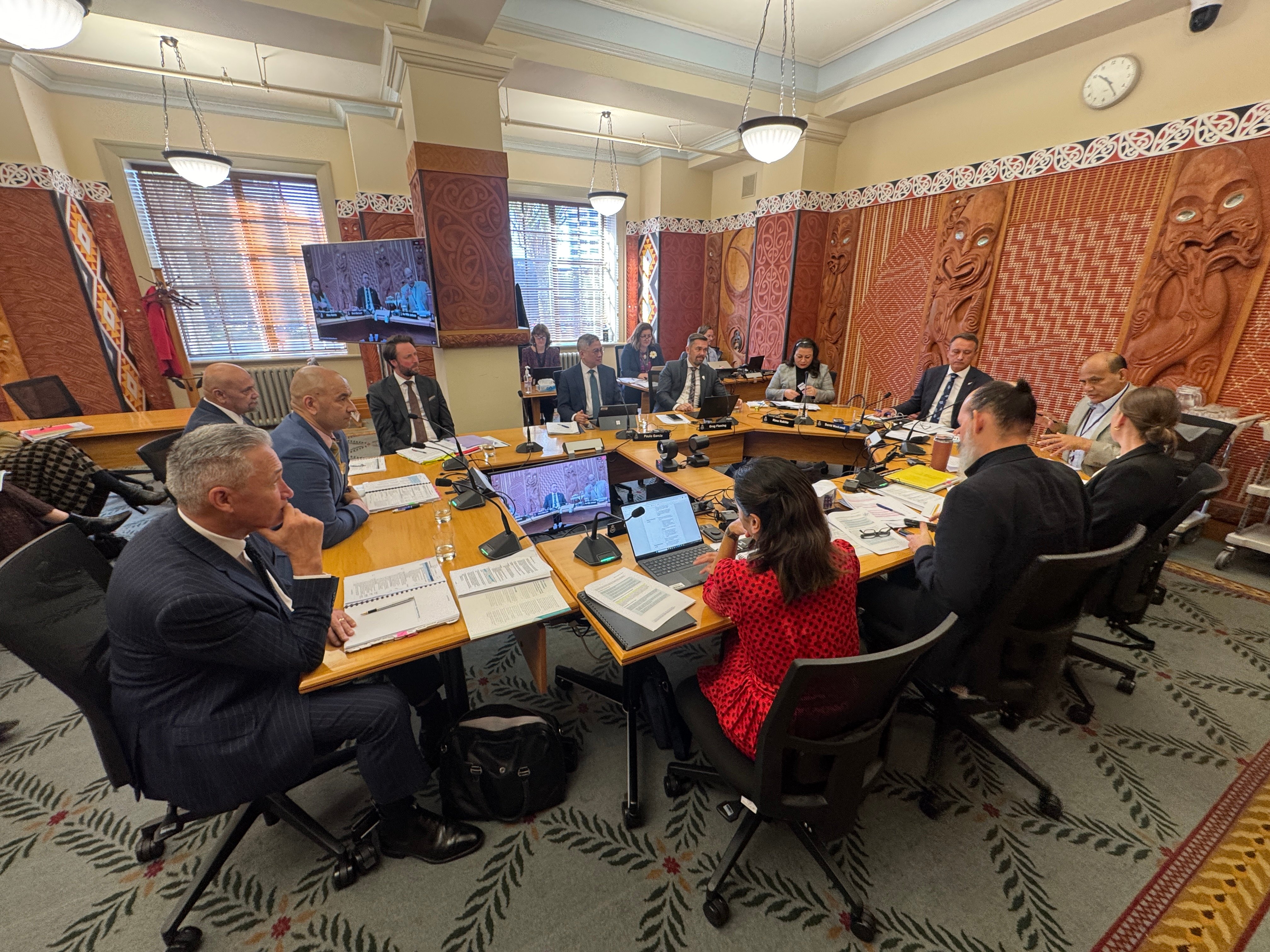

Opposition MPs have intensified scrutiny on the government’s disaster response funding model, arguing that the requirement for marae to front emergency costs before seeking reimbursement is unsustainable for community sites acting as civil defence hubs.
During a Māori Affairs select committee hearing today, Labour MP Georgie Dansey challenged the government’s expectation that marae should manage upfront payments and receipts during a crisis or natural disaster. Describing the current system as “ludicrous,” Dansey noted that as marae are hit by repeated weather events, their resources are being depleted, undermining their ability to respond effectively.
“We need that funding up front,” Dansey told the committee. “The minister wasn’t able to provide me with information of how he’s going to do that for our marae.”
“The minister said, look, we respond when a marae is hit or a community is hit in the marae response, then we reimburse the marae for their costs. But that relies on the marae having the resource in the first place to pay for that and as they are hit over and over again,” she said.
She further emphasised that marae understand their communities best and require upfront resources to ensure they can protect those they serve.
In response, Māori Development Minister Tama Potaka defended the current mechanism, suggesting that the focus remains on ensuring government agencies are responsive during and after weather events.
“We are holding those various agencies to account or liaising with them to ensure that the agencies are responsible, responsive in front of and behind massive events,” Potaka said. He noted that the existing process for welfare support often relies on the government reimbursing marae for costs incurred during a disaster, such as feeding the community.
George Mackey from Te Puni Kōkiri added that the agency’s relief fund last year was designed specifically to facilitate these payments. “So what our relief fund allowed us to do was to be able to reimburse the costs of feeding our whānau and communities,” Mackey said.
Te Pāti Māori MP Oriini Kaipara echoed the concerns regarding the financial burden placed on these marae. She highlighted that marae consistently open their doors to the wider community – not just Māori – during emergencies, yet the government expects them to bear the initial financial risk.
“We aren’t saying ‘just give money’ without review, but don’t point to the marae and say ‘you carry the debt, then we’ll pay it back,'” Kaipara said.
The debate comes shortly after Climate Change Minister Simon Watts announced approximately $10 million in funding for solar power projects across six marae in the Waikato and Eastern Bay of Plenty regions. While this long-term investment aims to build infrastructure, the current friction highlights a gap between funding for sustainable energy projects and the immediate liquidity needed to respond to sudden natural disasters.
As the country continues to face severe weather events, the tension between the role of marae as essential frontline hubs and the limitations of a reimbursement-based funding model remains a critical point of contention in Parliament.