
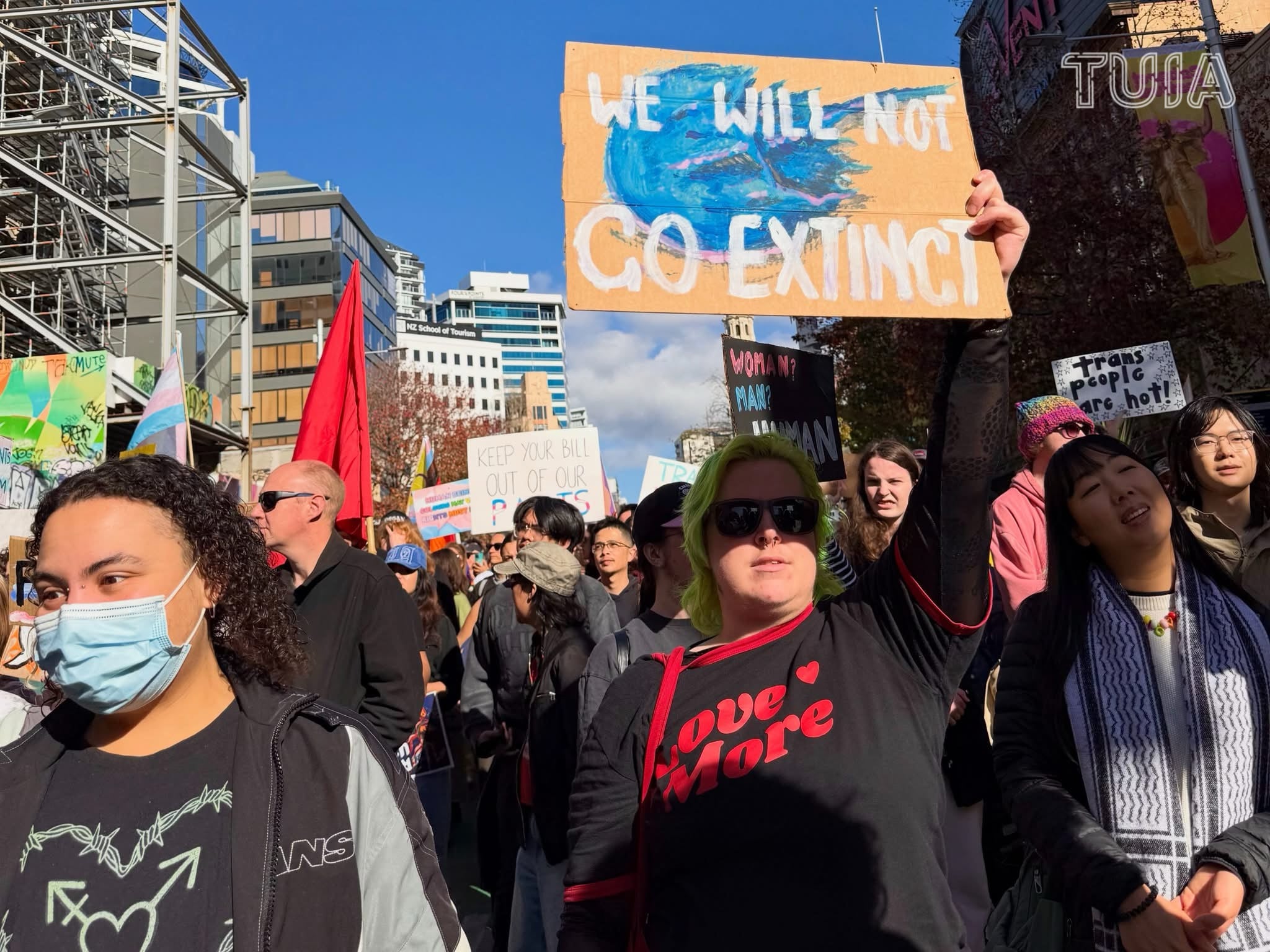

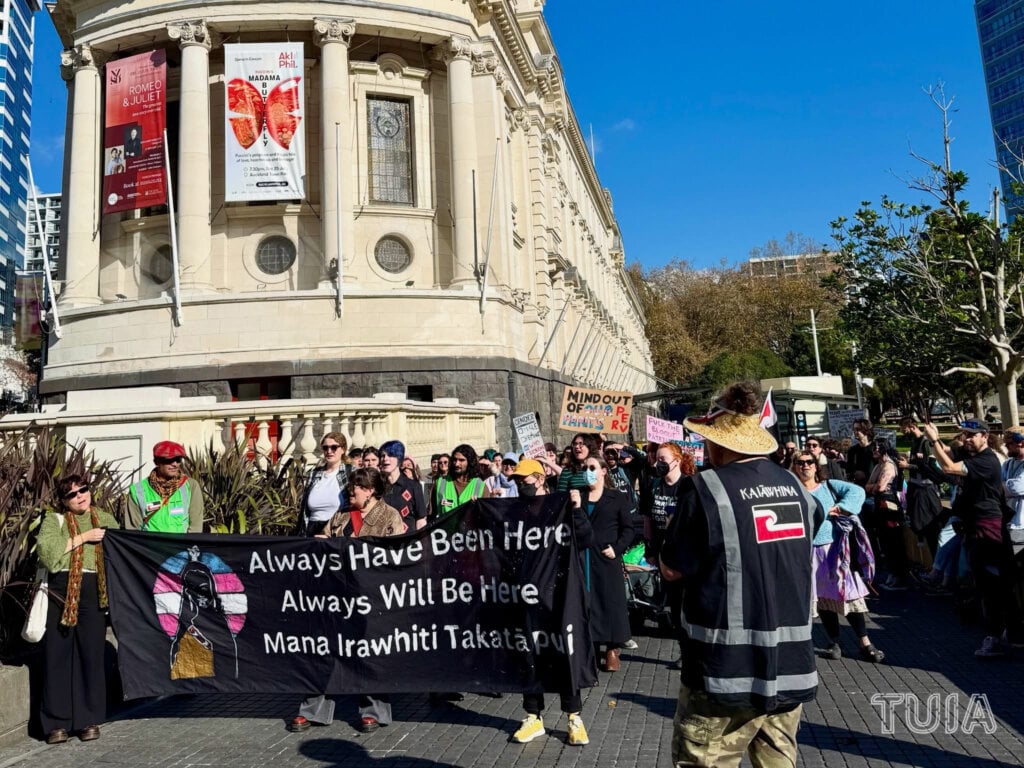
As thousands marched through the streets of Auckland and Wellington opposing a bill that would legally define “woman” and “man” in New Zealand law, one protester carried a message etched into her face.
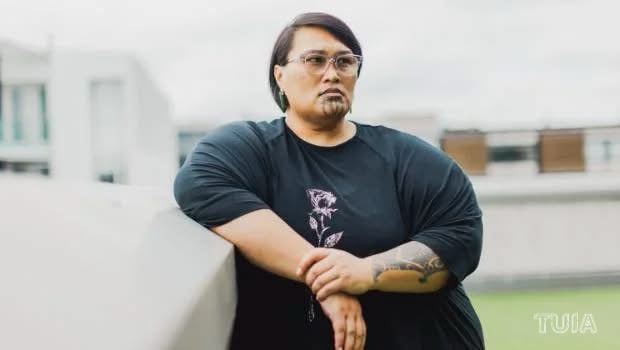
Tu Chapman, an intersex Māori leader working in health and mental health governance, says her moko kauae represents whakapapa, identity and belonging — not biology.
The Legislation (Definitions of Woman and Man) Amendment Bill, introduced by New Zealand First MP Jenny Marcroft, would define a woman as an adult human biological female and a man as an adult human biological male in New Zealand legislation.
For Chapman, the debate is deeply personal. “The most important thing is a person’s identity,” she says.
Born intersex, Chapman says she spent years trying to understand where she belonged in a world that often struggled to understand people like her.
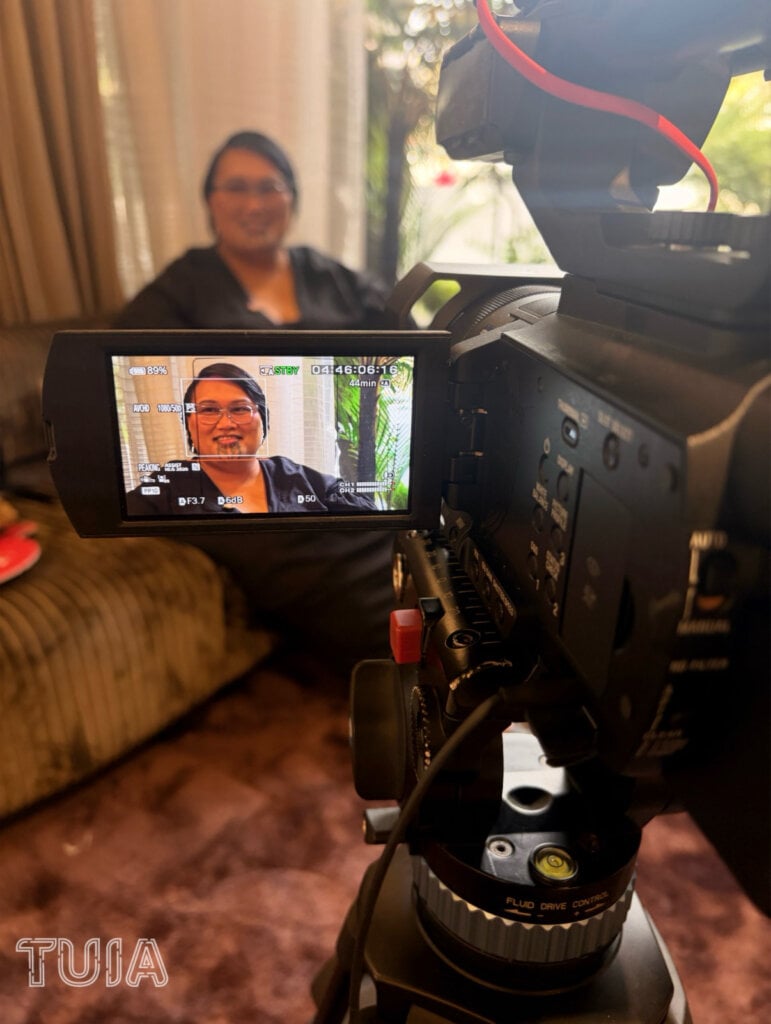
She says intersex voices have been largely absent from the public conversation.
“Our voices have disappeared. Our faces have not been seen in these discussions, yet others are comfortable speaking about us,” she says.
Central to her story is her moko kauae. Chapman says she worked alongside artists and cultural experts to understand the significance of tā moko and what it meant for her journey. The result was a taonga that reflects both her whakapapa and her lived experience.
“The intersex identity is at the heart of my moko kauae,” she says. Chapman also rejects suggestions that the right to wear a moko kauae should be determined solely by biology.
“We’ve heard women ask what it means for you to wear this taonga. But that way of thinking focuses only on the whare tangata.”
Instead, she says whakapapa is the foundation. “My whakapapa is the primary reason I carry this taonga.”
As submissions on the bill continue, Chapman says whatever the outcome of the political debate, her identity remains unchanged.