
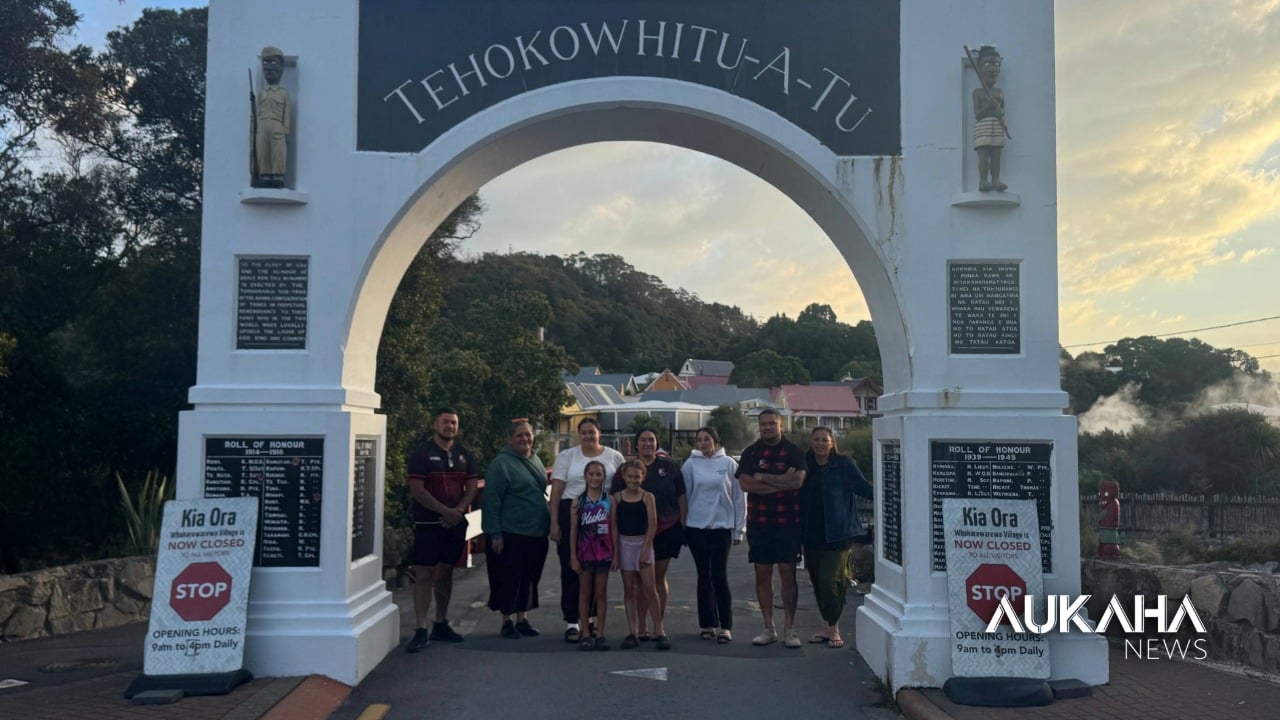
A communal iwi village known worldwide for its manaakitanga is now closing down at night. Residents of Te Whakarewarewa Village have reintroduced nightly closures and activated ‘Pā Patrol’ following a significant increase in after-hours intrusions, some involving armed individuals.
The closure runs from 8:30 pm to 6:00 am and is a protective measure to ensure the safety of the community and its sacred geothermal resources.
Residents say the village, while a major tourist attraction by day, is primarily a home, and the late-night intrusions have become a serious safety concern.
“Whilst it is a tourism village throughout the business day, Monday to Friday, it’s not like we’re not used to that but what we are still struggling with now and just everyone thinking it’s opened 24/7 when it’s not,” said Sharon Porter, village resident.
“So our kids are armed here with our whakapapa just trying to ascertain who people are, people coming to access our taonga for the baths, steamboxes, theyre sitting here armed with their whakapapa but they’re not expecting to have knives pulled on them,” she said.
Marina Moana Raimona-McGarvey, also from Te Whakarewarewa, expressed her commitment to the protection crew. “I am passionate about Pā Patrol because over the past months and recently we’ve seen an increase of undesireables coming up to our Pā, especially late at night,” she stated.
“How would they like it if someone was walking in their backyard late at night because that’s what it is, all our whānau here, that’s their backyard. The rāhui is where they go to bathe, the Blueys is their sacred spot so that’s what I would say, how would you like it if we were to walk into your backyard at night under the influence of alcohol.”
The move has been described as a measure for safety, not exclusion, and for now, the gates close each night until the issue of outside intrusions is resolved.
Ko ngā kainoho anake e āheitia ana ki te pā I ngā haora iti o te pō!
Kua whakahokia mai te rāhui pō ki te kāinga o Te Whakarewarewa, i waenga i te haurua mai i te waru o te pō tae noa ki te ono karaka o te ata, hei aukati i te hunga rāwaho e kuhu mai ana i ngā haora pō.
“Ko ngā mahi mō te taha ki te mahi whakamarumaru, ko te whakariterite i ngā whanaunga, kia tae mai i ia pō, i waenga i a te haura mai i te 8 tae noa ki te poupoutanga o te pō,” e ai ki a Mapihi Kahurangi Davis, o Te Whakarewarewa.
“I ngā marama tata nei, kua kite mātou te haukāinga i te nui o te hunga rāwaho kua tae mai i ngā haora o te pō, te nuinga o rātou kāhore e whakapapa ana ki te pā, otirā kāhore e mōhio ana ki ngā tikanga o te pā e pīrangi ana rātou ki te whakamahi i ngā hīrere, i ngā puna, otirā, i ngā ngāwhā mō ngā kai hoki,” hei tā Mapihi anō.


“Engari kei wareware te hunga rāwaho he kāinga hoki tēnei – ka tūwhera mātou i te kāinga i te ao, ā, ko mātou tērā e tōhaina ana i ngā whare, i ngā kai, i ngā taonga, aha rānei, ia te ra, nā reira tukuna i ngā whānau o roto i te pā, kia whakatā, kia wātea ai te hinengaro, kia pai ai te rere o te wairua, kia pai anō te manaaki i te manuhiri i te rā.”
Ko te karanga o tēnei tira mātaipō, ko Pā Patrol, ā, ahakoa te nui o te mahi tūao, e whakapono ana rātou he kaupapa nui nō te ngākau. Mō nāianei, kua katia te tatau nei i ngā pō, tae noa mai ki te wā ka hekea rawatia te rāwaho.