
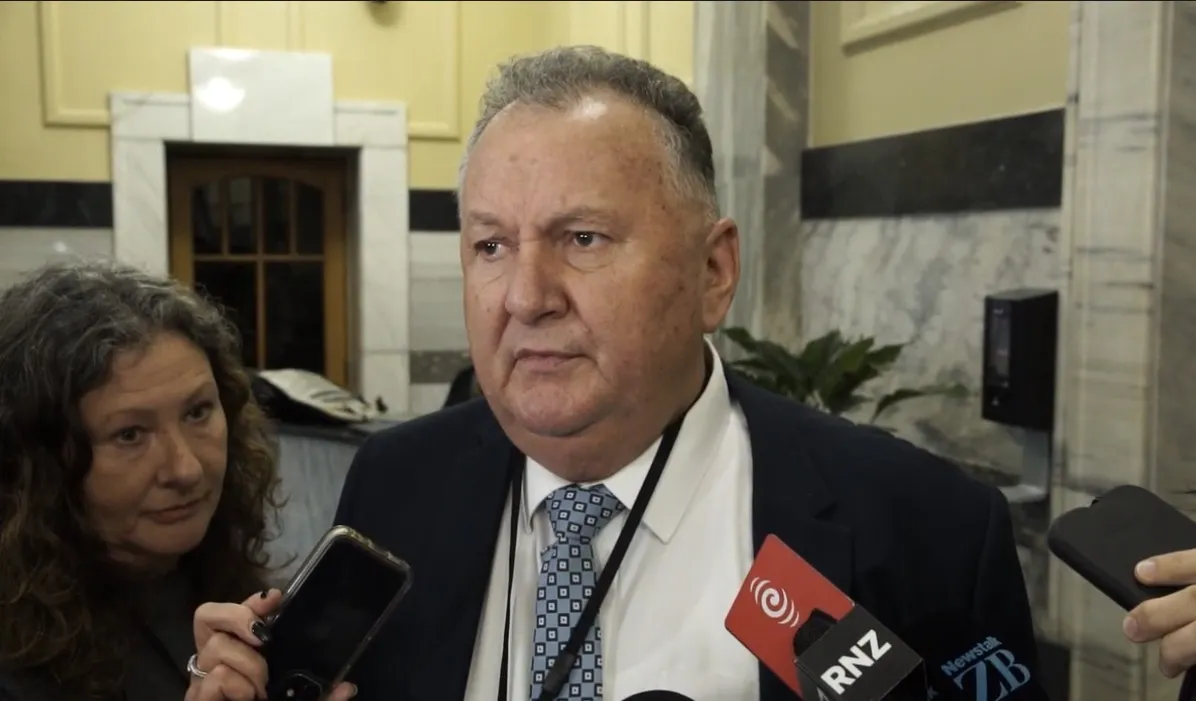

New Zealand First deputy leader Shane Jones says his party will campaign on reviewing the role of the Waitangi Tribunal, after it delivered a damning assessment of the Government’s proposed changes to Treaty provisions across New Zealand law.
The Tribunal’s 334-page report, Te Tinihanga o ngā Mātāpono, found Cabinet’s February 2026 decision breached the Treaty principles of partnership, active protection and good government.
It called for the reforms to be immediately paused, warning that repealing Treaty provisions and reducing stronger obligations to “take into account” would amount to a “significant constitutional regression”.
But Jones rejected the Tribunal’s findings and questioned whether it was moving beyond its appropriate role.
“I think the Waitangi Tribunal is not the House of Lords. It’s not the Supreme Court that’s got the ability to strike down legislation,” Jones said.
“What is the appropriate role of the Waitangi Tribunal? Because many of the things that we’re doing, we went and campaigned on them.”
Jones argued the Government had electoral legitimacy to pursue its policies and rejected suggestions they would harm hapū and iwi.
He said the growing tension between the elected Government and the Tribunal was “something that we’re going to campaign on”.
However, Jones did not explain what form a review would take or whether New Zealand First would seek to restrict the Tribunal’s powers. He said further detail would be provided when the party completed its election manifesto.
Minister for Treaty of Waitangi Negotiations Paul Goldsmith also rejected the Tribunal’s description of the reforms as constitutional regression.
“I have read it and I don’t agree with that summary,” Goldsmith said.
“We were elected as a government to make some changes in this area. [It was] part of the coalition agreement.”
Goldsmith confirmed the legislation would not pass before the election but said work on it would continue.
“The bill won’t be passed before the election, that’s obvious. But we’re working hard to get it underway.”
He defended Parliament’s right to reconsider how Treaty obligations are expressed in legislation, saying it was “perfectly acceptable and legitimate” for governments to examine what Te Tiriti means within a modern democracy.
Labour’s Treaty of Waitangi issues spokesperson Willie Jackson said Jones’ comments showed the Tribunal itself was now in the Government’s sights.
“The Tribunal’s job is to critique governments. They critique us,” Jackson said.
“What does he want? Does he want them to come out and celebrate the rubbish that they’ve been rolling out over the last couple of years?”
Jackson said the report reflected what he described as a sustained attack on Māori and Treaty rights. He also backed the Tribunal’s conclusion that trust in the Crown had been damaged.
“We’re talking about a trampling of Māori rights, Treaty rights, Māori language rights,” he said.
The Tribunal found Cabinet approved the reforms without adequate evidence, proper analysis of the effects on Māori or meaningful engagement with its Treaty partner. It said the process had already damaged the Māori–Crown relationship and created distress and uncertainty among Māori.
It recommended that no Treaty provisions be repealed or weakened and that any future reform involve at least six months of meaningful co-design with Māori.
While the Tribunal stopped short of finding bad faith, it concluded Cabinet had acted recklessly and dishonoured Te Tiriti by making decisions of constitutional importance without first consulting Māori.