
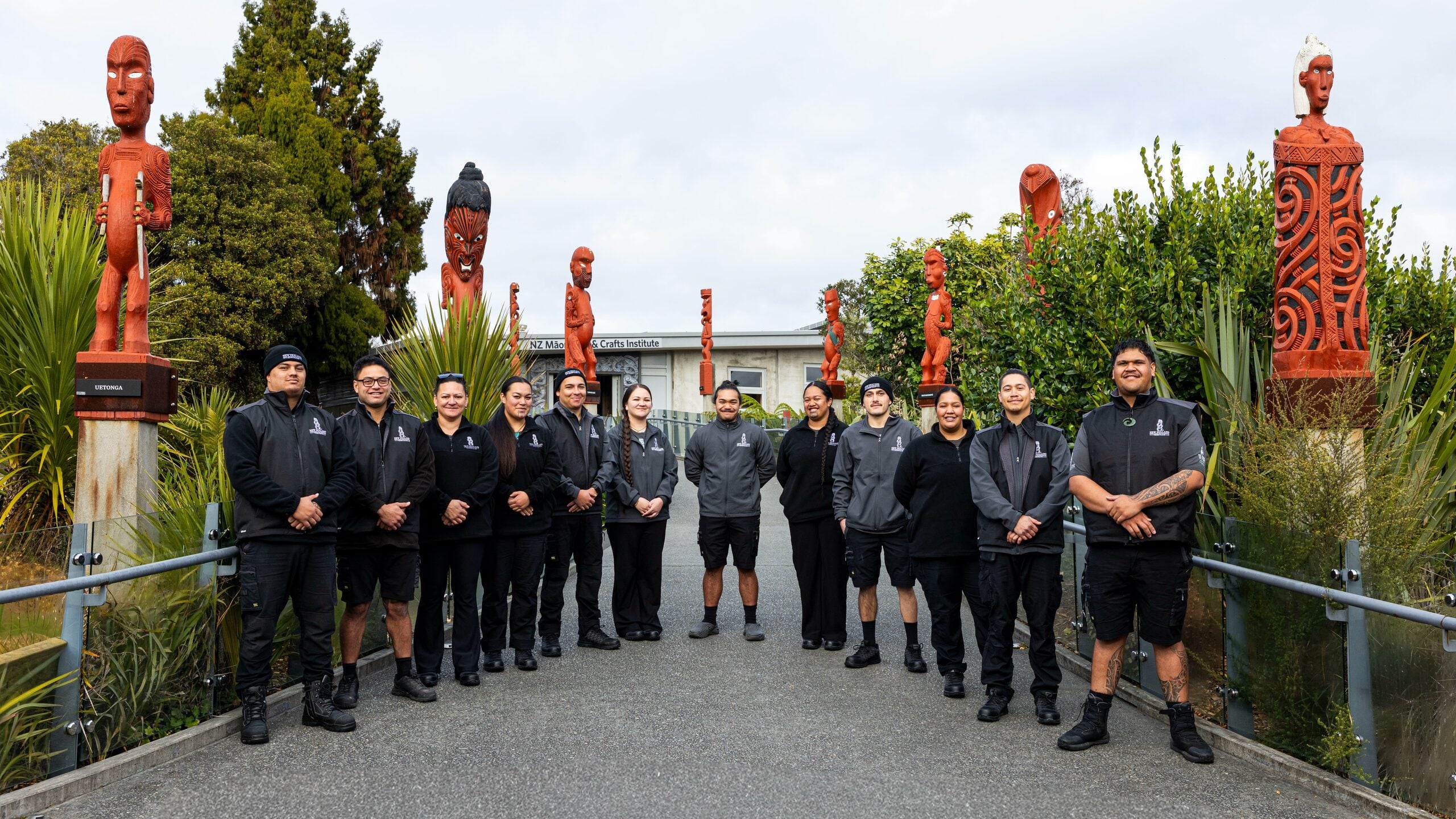

Twelve tauira from across Aotearoa have been welcomed to Rotowhio Marae at the New Zealand Māori Arts and Crafts Institute (NZMACI), marking a new chapter in a 99-year legacy dedicated to the protection and advancement of Māori arts.
The intake of 12 students – distributed across Te Wānanga Whakairo Rākau (National Wood Carving School), Te Takapū o Rotowhio (National Stone and Bone Carving School), and Te Rito o Rotowhio (National Weaving School) – represents a continuation of a vision first championed by Tā Apirana Ngata almost a century ago.
Carrying the mātauranga forward
For Acting General Manager Ranginui Rikirangi-Thomas, the arrival of these tauira is more than just a course enrollment; it is about the survival of cultural knowledge.
“When you look at the history of the New Zealand Māori Arts and Crafts Institute and why these wānanga were established, it’s about ensuring this taonga continues to thrive through future generations,” Rikirangi-Thomas says.
“We are privileged to pass this mātauranga on to these tauira, who will one day return home to strengthen the knowledge, capability and traditions of their own whānau, hapū and iwi”.
Deep roots and new journeys
The intake is intentionally intimate, with only four tauira accepted into each wānanga, a structure that ensures traditional knowledge is passed on at the highest standard through intensive teaching from NZMACI tohunga.
Among the new faces, the sense of connection to history is tangible. Mercia-Dawn Wharerau (Tūhourangi-Ngāti Wāhiao, Ngāti Pikiao), who has begun her studies at Te Rito o Rotowhio, is the great grand-daughter of the late tohunga raranga Emily Schuster QSM, the inaugural head tutor of the weaving school.
“I feel very grateful to be starting at NZMACI and to have the opportunity to carry on my Nan’s legacy, as weaving has always been part of our family,” Wharerau says.
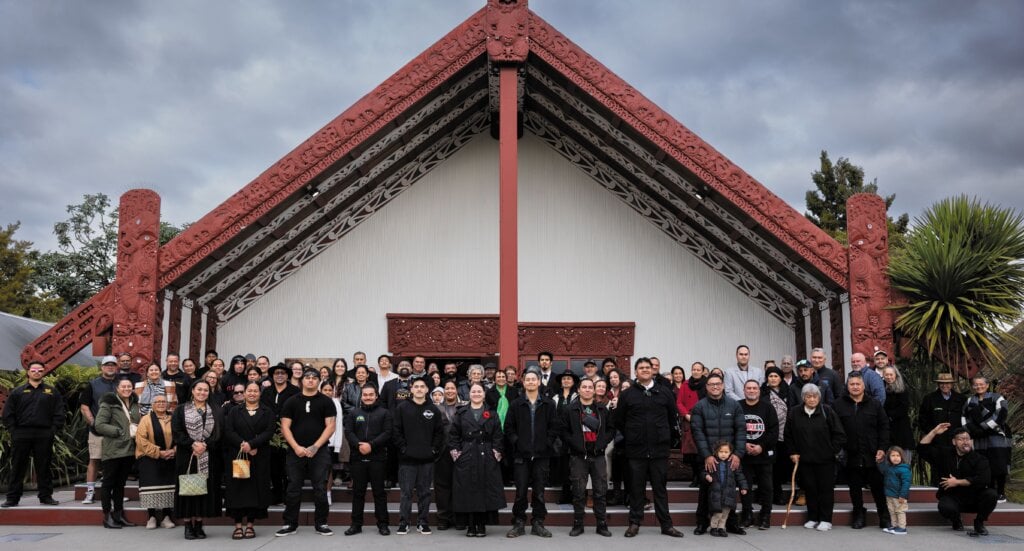
The pōhiri also served as a moment of reconnection for Ngāti Ranginui, with Chair Charlie Rahiri acknowledging the long-standing whakapapa between the iwi and the institute.
“Today felt like a homecoming,” Rahiri noted during his whaikōrero. “We’ve had so many of our young people come through here and learn this art form before taking that knowledge back to Tauranga. It’s special when our uri choose to come to NZMACI to hone their craft”.
A call for sustainability
Despite the cultural significance of the institute, the training programmes face ongoing challenges. Under the New Zealand Māori Arts and Crafts Institute Vesting Act 2020, the organisation functions with no ongoing government operational funding.
Rahiri, who is currently on sabbatical from the Ministry of Foreign Affairs and Trade, emphasised that the institute is not just an education provider, but a national icon essential to New Zealand’s identity.
“Our culture is New Zealand’s unique value proposition to the rest of the world, and very few organisations are able to represent both te ao Māori and Aotearoa on the global stage in the way NZMACI does,” Rahiri says.
“Central Government needs to get serious about how it funds and sustains NZMACI because this kaupapa, with an Act of Parliament, is one of the things that truly distinguishes New Zealand from other countries”.
The 2026 intake marks the 51st year for the carving school, the 14th for the stone and bone school, and the eighth for the national weaving school, solidifying NZMACI’s ongoing role in securing the future of traditional Māori arts.