
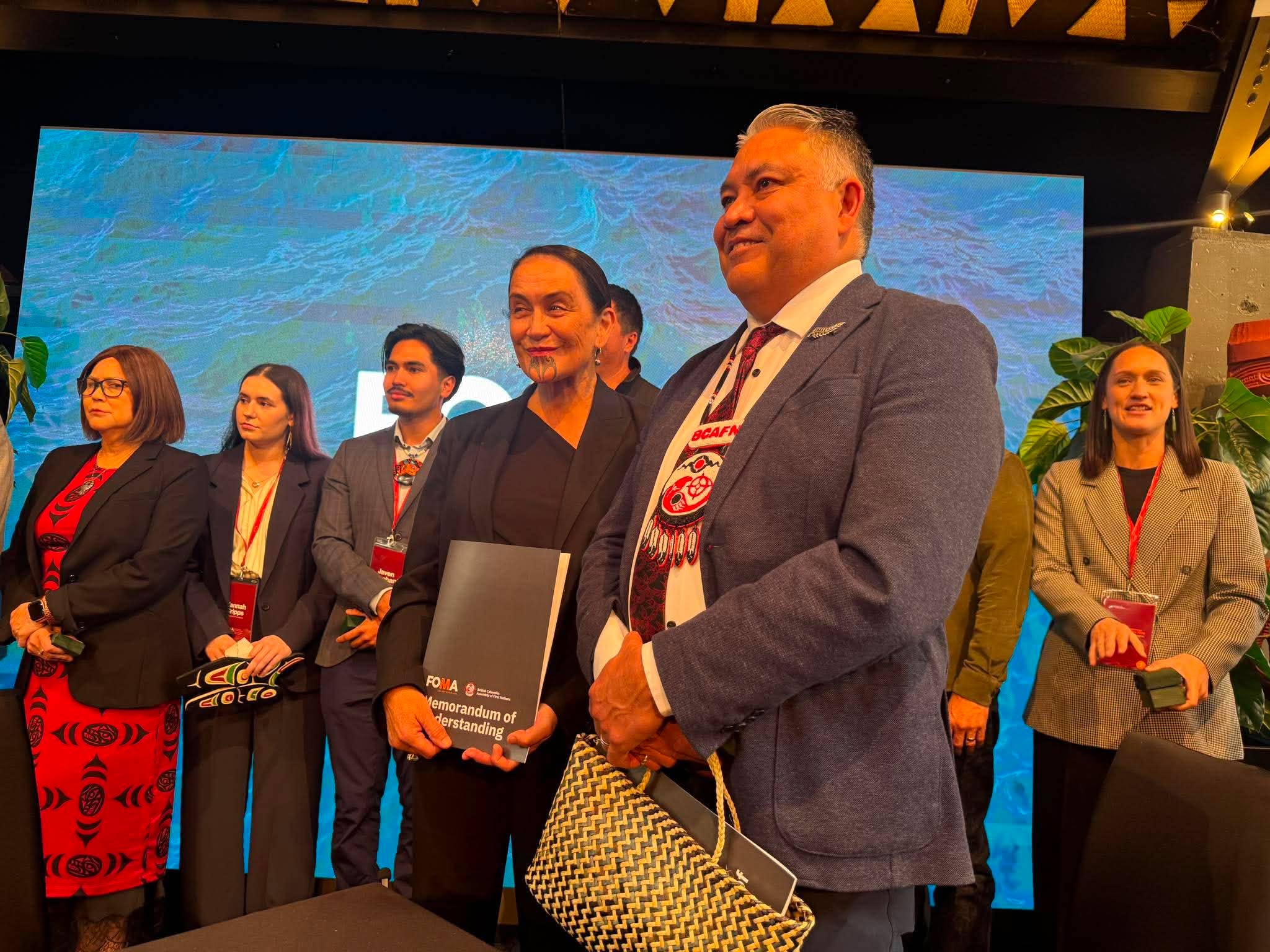


A landmark agreement signed today at the Federation of Māori Authorities (FOMA) Economic Forum 2026 marks a significant step toward deeper economic and cultural ties between two major indigenous nations.
FOMA and the British Columbia Assembly of First Nations (BCAFN) have officially entered into a Memorandum of Understanding (MOU), establishing a formal framework for trade, knowledge exchange, and cooperative economic development.
The agreement is designed to foster a direct “indigenous-to-indigenous” economy, moving beyond traditional colonial trade models to focus on shared governance, leadership, and commercial strategy.
“What we’re finding is that the immediate value-add, if I might, for the MOU with British Columbia Assembly of First Nations is exchange – exchange of people and place, our knowledge and experience in terms of governance and leadership over commercial and cultural entities,” said FOMA Chair Traci Houpapa.
“What we’re wanting to do with the BCAFN MOU is look at investment and look at the development of indigenous -to-indigenous economy and trade,” Traci said.
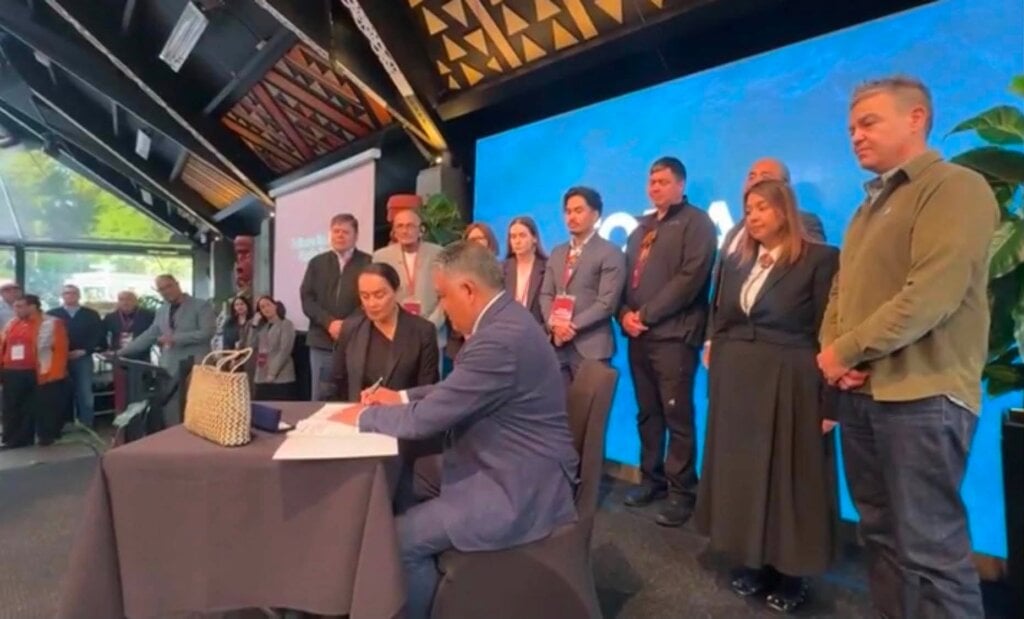
For the BCAFN, the partnership represents a shared struggle and a shared future. Regional Chief Terry Tegee of the Wolf Clan, representing the BCAFN, noted the striking similarities between the experiences of Māori and First Nations in British Columbia, particularly regarding the ongoing implementation of the United Nations Declaration on the Rights of Indigenous Peoples (UNDRIP).
“We are trying to implement the United Nations Declaration on the Rights of Indigenous Peoples, a provincial and federal law to align colonial laws with the declaration,” Tegee said. “This allows us to assert our sovereignty and self-determination to make decisions on our own lands. So, it’s a very similar story in terms of conflict but at the same time assert our rights as indigenous people.”
Tegee highlighted the personal resonance of the partnership, noting that the shared cultural values made the union a natural fit. “It feels like family and like home back in British Columbia,” he said. “That makes it very easy to build a relationship with Māori.”
Looking ahead, both organisations view the MOU as a foundational step. While concrete commodity trade is on the table, leadership from both sides emphasized that the primary immediate value lies in relationship-building.
“The most valuable trade we can have is building this relationship with Māori,” Tegee said. “From there, we can build on commodities or other initiatives regarding economic development.”
The agreement comes as FOMA hosts its annual economic forum, which has drawn international attention to the potential for indigenous partnerships to reshape global trade and economic dynamics.