
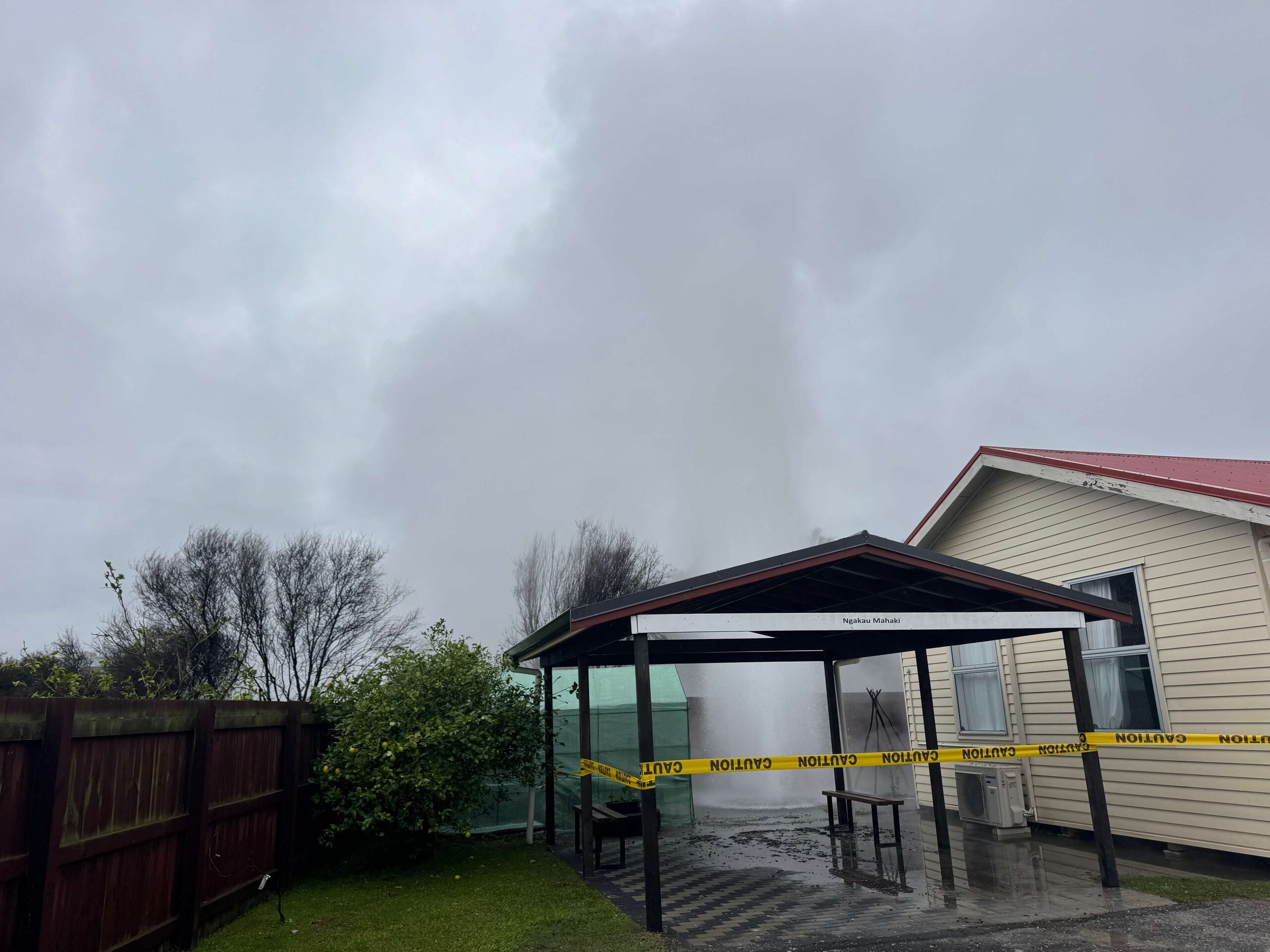

A grouted, private geothermal bore at Tarewa Pounamu Marae on Tarewa Road in Rotorua failed, erupting water, steam, mud, and concrete high into the air, creating a geyser effect. The eruption, which began Tuesday night, prompted a member of the public to alert the Rotorua Lakes Council around 4:30 pm.
The site was immediately fenced off. A specialist on site this morning told Aukaha News that the eruption could have reached a disaster scale similar to Whakaari, though fortunately, no one was injured or hurt. And that the eruption was expected to continue until the bore is plugged, and specialists had estimated it would take “about two or three days to fix this”.
A Rotorua Lakes Council spokesperson provided an update stating “the bore on Tarewa Road is now controlled and contractors will begin work on re-grouting the bore, tomorrow.” While the exact cause of the failure is unknown.
Hemi Waerea from Tārewa Pounamu Marae suggested the previous sealing of the bore back in the 1980s was flawed and not done correctly by the Council of the time. He said that the Council plugged it with cement that is now all over the place and is looking forward to it being fixed.
Providing wider context, the council’s geothermal inspector, contractor Andrew Austin, says there has been “a bit of increased geothermal activity generally in recent weeks, since recent heavy rain, which is normal following rain events and usually dies down again over time.”
No damage to buildings was reported, but vehicles in the vicinity were sprayed with steam and mud. The Council advises that any spray “should be washed off gently with soapy water, ideally while still wet.” A warning has also been issued to the community to be cautious, particularly those coming to view the area, because the water is “extremely hot.”
E puia ake ana he ngāwhā ki Tarewa Pounamu
Kua pakaru mai tētahi rua ngāwhā tūmataiti, kua katingia ki te raima, ki te Marae o Tarewa Pounamu i te huarahi o Tarewa, ki Rotorua, e pupuhi ana te wai, te korohū, te paru me te raima ki te rangi, e puta ai he puia. I tū te pahū i te pō o te Tūrei, ā, i whakamōhio atu tētahi tāngata ki te Kaunihera o ngā Roto o Rotorua i te tata ki te 4:30 i te ahiahi.
“Kua pakaru mai anō te raima i rau atu ki te roto i te kōhao. Nō reira, kua pakaru mai anō tērā, arā, kua puta mai, kua hahū mai tēnei o ngā ngāwhā ki waenganui tonu i te marae nei o Tārewa Pounamu. Nō reira, ehara i te mea pai,” he ai ki a Hemi Waerea o Tārewa Pounamu Marae.
“He mōrearea nui. Kei konei tonu ngā kaimahi e mahi ana, engari i tēnei taha rā anō o te marae. Engari ko te mate, i reira kē te nuinga e hui ana i tērā ata, e hui ana rātou mō tētehi atu kaupapa i roto i ngā whare. Koirā hoki te wai ka puta ki ngā motokā kei muri,” hei tā Hemi.
“Engari ko te āhua ki te whakamahinga, te katinga o te rua ngāwhā nei, tērā tētehi āhuatanga kāore pea i tika i a rātou. Nā te Kaunihera anō tērā i pura ki te raima, nō reira mā rātou anō e whakatika,” hei tāna anō.
E ai ki ngā mātanga, ka hū tonu te puia tae noa ki te wā ka pura te kōhao, ā, e kī ana “he āhua rua, toru rā pea mā rātou e whakatikatika i te mea nei”. Kua whakapā atu te Kaunihera o ngā Roto o Rotorua ki ngā rangatira.
Ko te kaimātai ngāwhā a te kaunihera, a Andrew Austin, i kī mai, kua paku piki te āheinga ngāwhā i roto i ngā wiki tata nei, mai i ngā ua nui, he mea noa i muri i ngā ua, ā, ka heke haere anō i roto o te wā.
Kāore he paku tūkinotanga ki ngā whare, engari i pīkaruhia ngā waka e te korohū me te paru. Ko te tohutohu, kia āta horoia ki te wai hopihopi, otirā, i te wā e mākū tonu ana. Kua tukuna anō he whakatūpato ki te hapori kia tupato, rawa ki te hunga e hiahia ana ki te matakitaki, nā te mea he “wera rawa atu te wai”.