



Ōtorohanga and Waitomo District Councils are moving forward with a joint “Head Start” proposal to amalgamate their regions, aiming to meet the government’s August 9, 2026, deadline. This initiative seeks to unify the two districts into a single unitary authority, reflecting their shared cultural and geographical ties within the Te Nehenehenui area.
Waitomo Mayor John Robertson has expressed strong support for the merger, emphasising the simplicity and logic of the proposal. “I think it’s a very simple merger proposal to bring them together, very simple. You know, we’re the same sort of people,” Robertson said. “I see it as really positive and really exciting if we could get it,” he said. “I don’t think they’re very big challenges at all. We would have to join two offices together; it would bring some costs down for ratepayers because you wouldn’t duplicate everything.”
Jaimee Tamaki, a Māori Ward Councillor for the Ōtorohanga District Council, highlighted that the alignment between the two communities is natural, comparing the districts’ demographics.
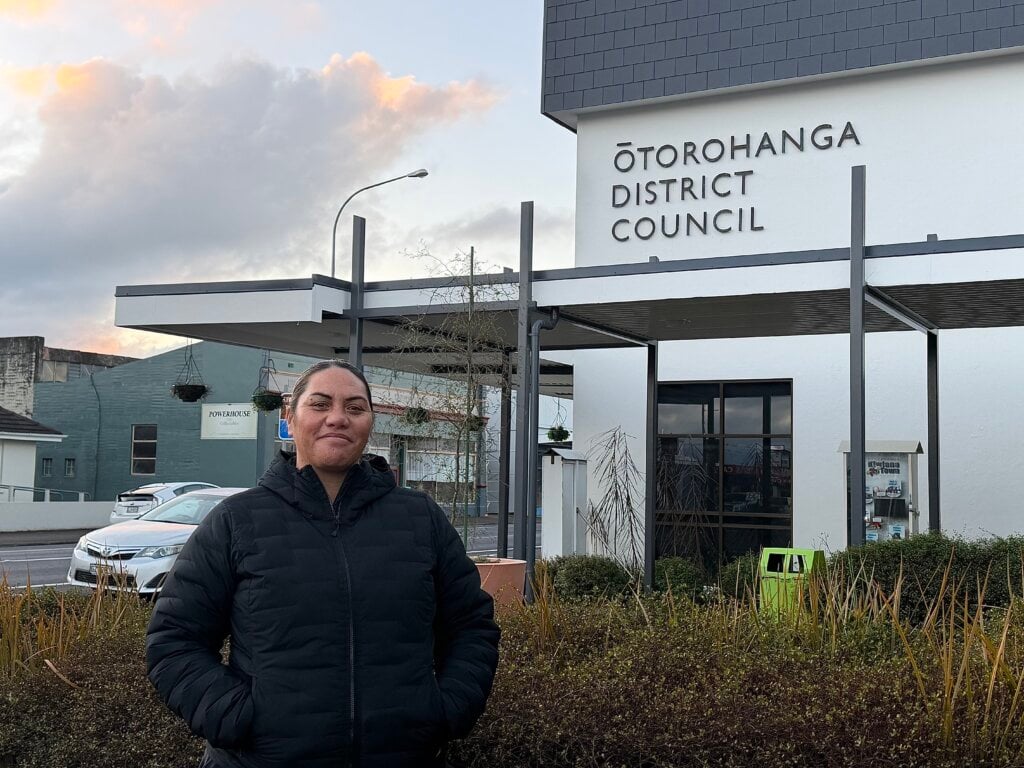
“When we had a kōrero around amalgamation, we came up with an analogy, ‘apples with apples,’ and so our mayor made a comment around our people here in Ōtorohanga are the same people in Waitomo,” Tamaki said.
“I think for Māoridom, we are one people; we are Maniapoto. I think it’s collectively a good move for us in terms of the bigger scope of helping our community, but I think as a country community – both communities – I think we can support each other really well, so I think it’s a good move,” she said.
“Predominantly, we know that the King Country is a framework built off the second Māori King, Kīngi Tāwhiao, when he placed the hat on the rohe and said the whakataukī that he said. So yeah, I think that alone, they could pull the two communities together under one mantle, but never forgetting that the ingoa King Country sits under the mantle of a Māori King.”
As the councils work toward the August deadline, the proposal remains a primary focus, with both leadership teams aiming to honour the history of the King Country, Te Rohe Pōtae, under a unified mandate.
From vision to validation: The road ahead for the King Country Merger
While the local desire for amalgamation between the Ōtorohanga and Waitomo District Councils is clear, the path toward a unified King Country authourity must now navigate the government’s rigorous “Head Start” assessment framework.
Ministers Chris Bishop and Simon Watts issued a strict three-month window on 5 May 2026 for councils to submit credible reorganisation proposals. This process is not merely a request for intent; it is a formal pitch that will be evaluated against strict national criteria to ensure any new entity is both functional and sustainable.
According to the government’s directive, the proposed unitary authority must demonstrate clear benefits rather than simple administrative convenience. Officials will assess the councils’ submission against five critical benchmarks:
- Deliverability: The proposal must be realistic, ensuring the new structure can be operational by or shortly after the 2028 local government elections.
- Planning Alignment: The reform must facilitate, rather than hinder, the rollout of the government’s new planning system and support infrastructure delivery.
- Structural Simplicity: The plan must actively reduce duplication, simplify decision-making processes, and improve efficiency across the region.
- Economies of Scale: The new authority must demonstrate value for money, enabling more efficient service delivery and improved long-term investment.
- Local Representation: Despite the shift toward a larger entity, the proposal must prove it can maintain a strong local voice, fairly balancing the unique interests of both urban and rural communities.
The urgency of this deadline is underscored by the government’s “backstop” policy. Ministers have been clear that if councils fail to step forward with a robust, supported plan, the government will intervene to impose a standardised reorganisation.
For the Ōtorohanga and Waitomo councils, this means the next ninety days are critical. The transition from a shared vision to a formal proposal requires not just political consensus, but a detailed operational blueprint.
“Proposals should focus on creating larger, more efficient unitary authorities that streamline functions, reduce duplication and improve decision-making,” Local Government Minister Simon Watts said.
“We’re giving councils real flexibility. Proposals don’t need to cover an entire region, but they must show clear support, strong leadership, and real benefits for communities,” Minister Watts said. “Councils told us they want reform, but they also want a bigger role in shaping it. Head Start gives them that opportunity while keeping change moving.”
As Cabinet prepares to review submissions later this year, the focus for local leaders will shift toward proving that their unified model can serve the people of the King Country more effectively than the status quo, while meeting the high bar set by the central government.