
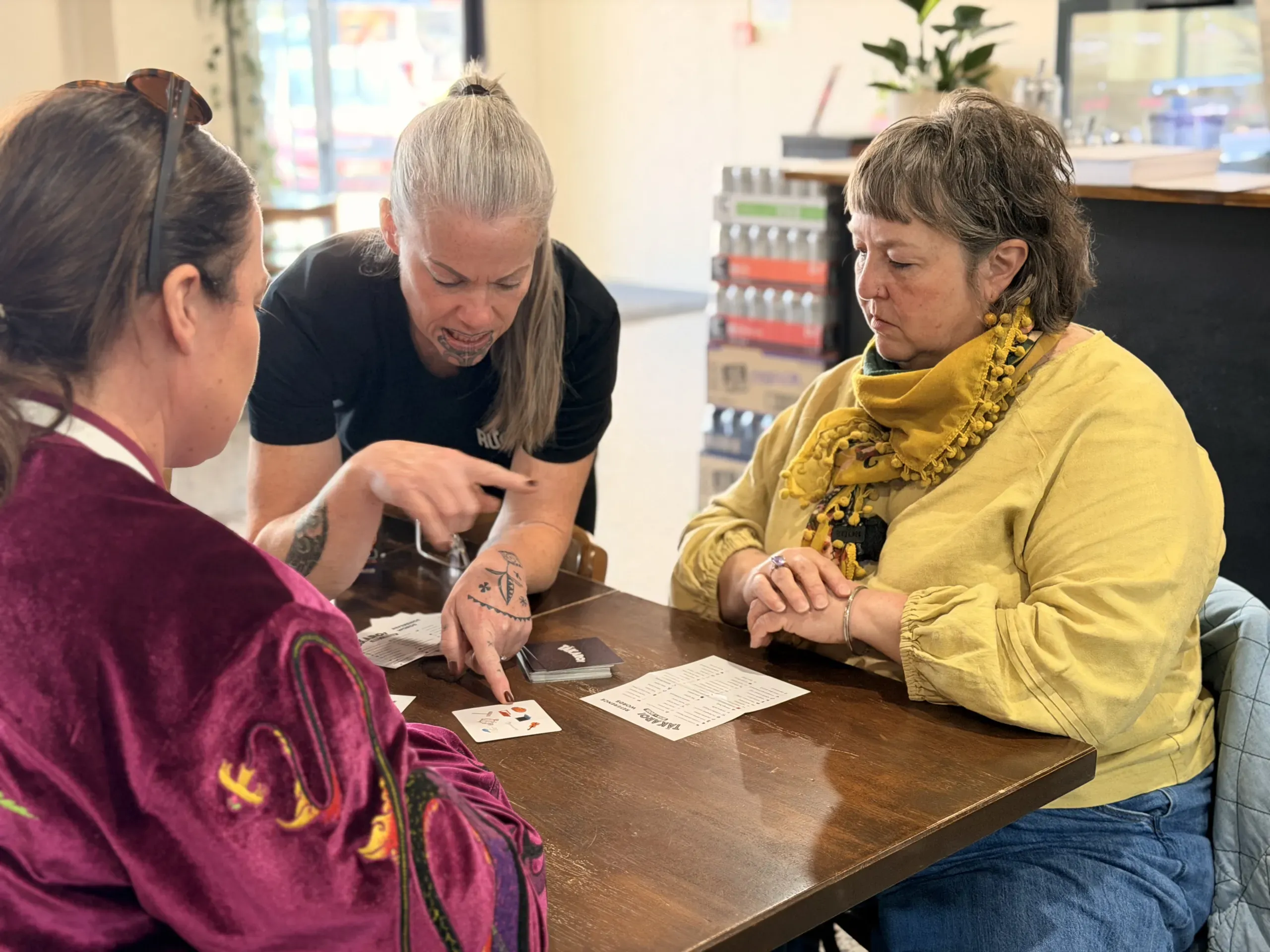

Kua tūwhera te wharekai Rūmaki ki Rotorua, he wāhi ahurei e whakakotahi ana i te kawhe, te kai, me te reo Māori hei painga mō te hapori me te katoa. :
“Āe, he whare Māori tēnei. Nā reira, he whare mō tātou katoa! Āe, he māmā ake te noho rūmaki ki a koe te reo. Heoi, kia kitea he au te whare haumaru mō te katoa,” hei tā te tumu o Rūmaki, a Miraka Davies.
“He pai tērā āhuatanga i te mea kei te ako tonu tātou katoa. Heoi, i a rā ka haere mai tētahi rōpū tata ki te tekau mā rima pea, he rangatahi he akomanga reo he kuia he koroua. Tā rātou harikoa katoa. Koirā te tohu pai,” hei tāna anō.
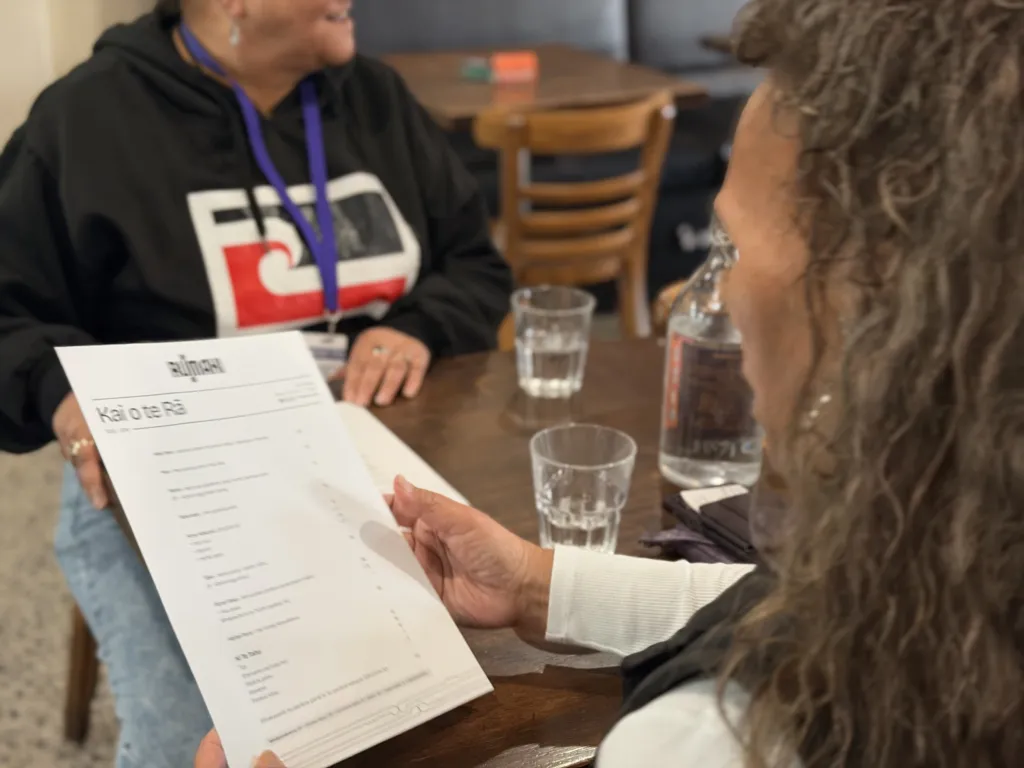
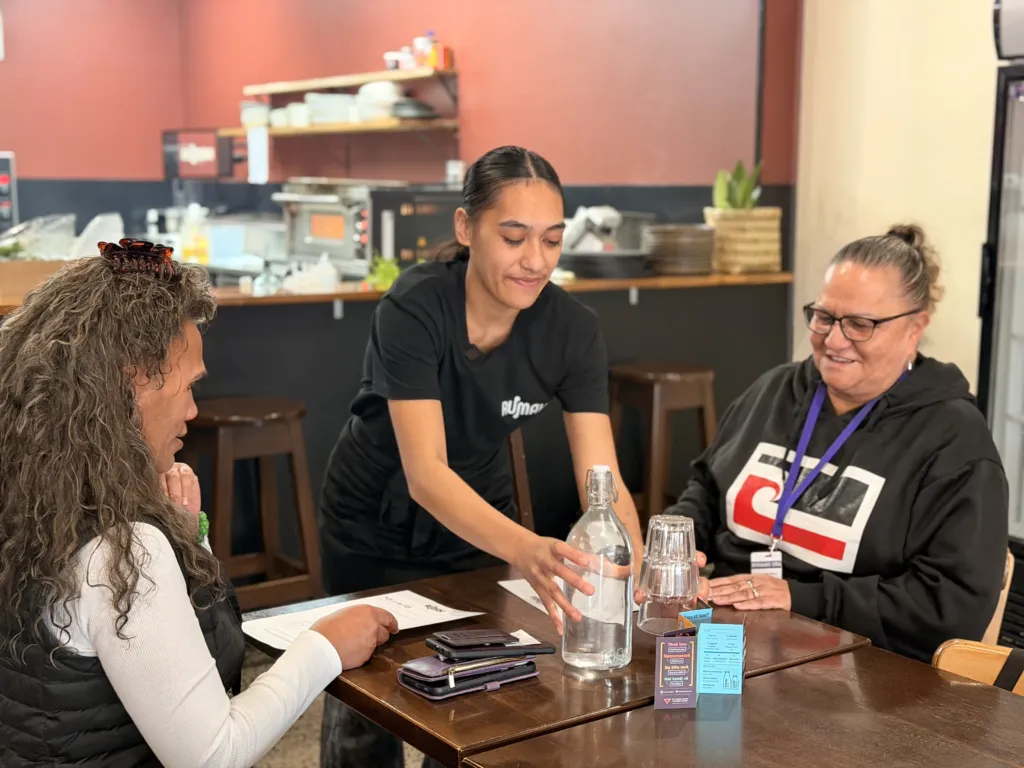
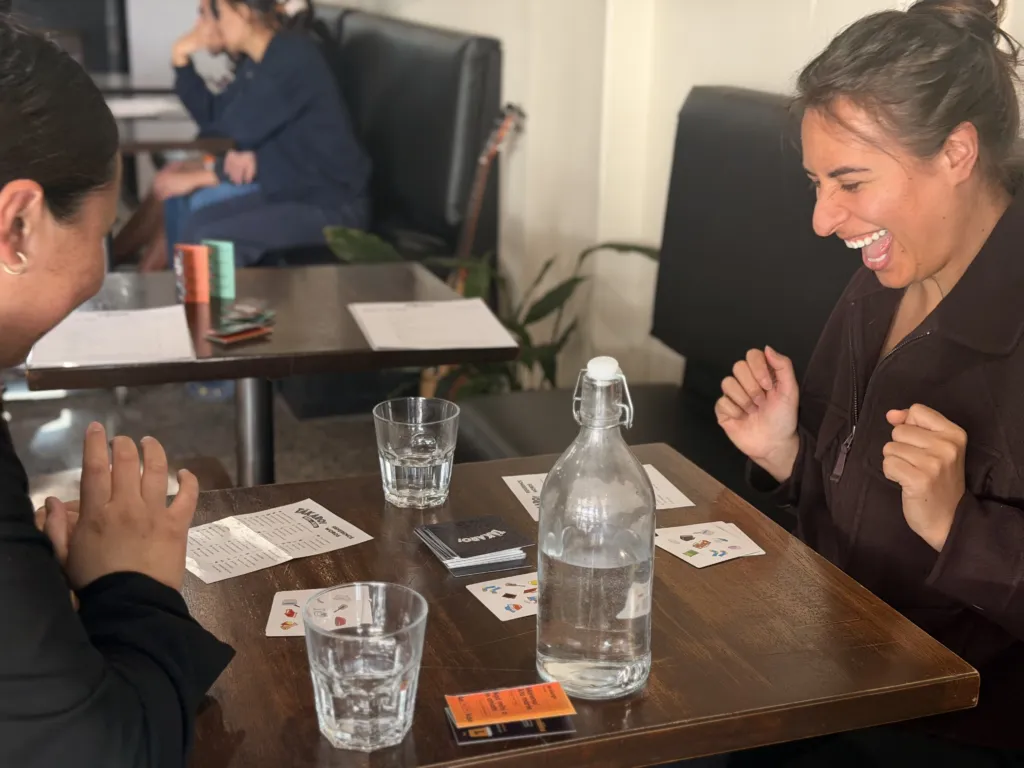
Brewing connection: Workers and customers embrace te reo Māori at Rūmaki Cafe
At the heart of Rūmaki Cafe are the people who bring its mission to life every day. Tewaiwera Kaienua, the front-of-house leader and a solo mother of two, shares why working at the café is so meaningful to her.
Tewaiwera also highlights the cross-cultural connections happening at the café, noting:
“I love to see other people, this morning we had a Chinese person come in with no reo at all. But, he walked out with some reo. So, it was cool teaching people our reo and getting to experience that with other cultures,” Tewaiwera said.
For American-born Rotorua resident Lynn Rasmussen, supporting the café is a way to embrace local heritage and tourism.
“The Māori culture is important for Aotearoa, not only because it’s our heritage but because it’s very important for tourism and I just want to see it thrive,” Rasmussen said.
Lynn adds that the environment makes learning and practising approachable without fear of judgment:
“It was real easy to come in and try our best with the language without feeling too self conscious, I felt a little bit but you know, I don’t feel like we were judged for it,” she said.