
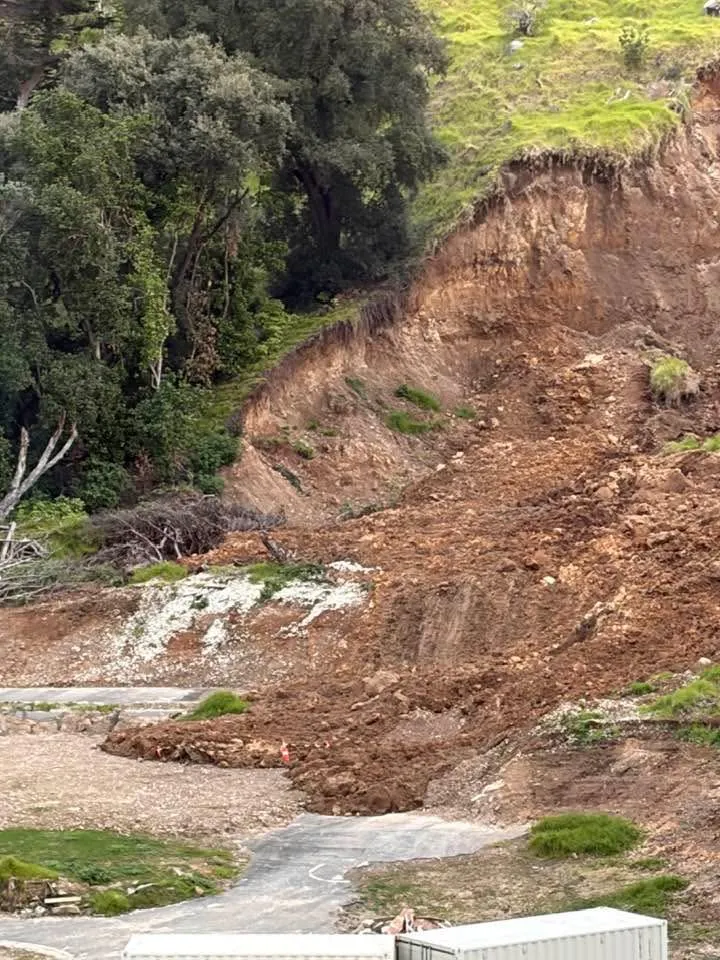


As the sun rises over Tauranga Moana the day after the release of the Davison Report, a heavy silence hangs over the community. The initial shock of the findings has given way to a profound process of reckoning. For the families of those lost on that fatal January day, and for the wider community, the report’s confirmation that the tragedy was “preventable” – following two decades of ignored warnings – is a truth that is only now beginning to settle.
The independent review into the 22 January 2026 Mauao landslide, led by former High Court Judge Hon. Paul Davison KSO KC, has delivered a scathing assessment of the Tauranga City Council’s risk management. His report reveals that for more than twenty years, competent consultants repeatedly identified the landslide hazard at the campground, yet opportunities to mitigate the risk were consistently missed.
“This was not a hazard that was unknown, hidden, or beyond the reach of foresight,” Mr Davison said. “One competent consultant after another identified the landslide hazard to the campground, located it on the very slope that failed, and explained, sometimes in stark terms, what the consequences of a landslide occurring could be,” he said.
Setting the record straight on trees
Amidst public speculation following the event, the report provides critical clarity regarding the cause of the landslide. Addressing questions about whether the removal of trees contributed to the disaster, Mr Davison consulted with a geo-technical expert.
“He’s advised me about the effect of the removal of trees, he’s also commented on where the trees were removed and he has confirmed that obviously the removal of trees does have potential to affect slope stability,” Mr Davison said.
“But he says that there is no evidence that the removal of those trees was a factor in the occurrence of this landslide… And he emphasises that the extreme rainfall is what caused this landslide and the removal of trees can be put to one side.”
He tūtohinga: Me mahi tahi te kaunihera, te tarahiti o Mauao me ngā iwi
E ai ki a Jack Thatcher, kaumātua o Tauranga Moana me tētehi o ngā Kaitiaki o Mauao Trust, he tata ki te toru tekau tau ngā iwi o te moana e īnoi ana mō ngā arotake me ngā ripoata o te maunga engari auare ake.
“E taumaha ana ngā mahi o te rangi nei te puta mai o te ripoata o Davison, ā, i runga i te hētanga kei roto i tēnei tari o te kaunihera ki ngā kaimahi, e mahi ana i roto nei,” hei tā Jack.
“Miharo, e pā ana ki te rangatira nei a Paul Davison mō tōna ripoata, 200 and something pages o tēnā report ripoata,” hei tāna anō.
I a ia e titiro ana ki ngā kitenga o te ripoata, i kōrero a Jack Thatcher mō te hiranga o te maunga me te roa o te wā e tono ana te Mauao Trust kia tirohia ngā raru o te whenua. “Ā, Ko te kaupapa o tō tātou nei maunga, he kaupapa nui mō tēnei tau. But i roto i te ripoata e kite ana mātou i te nui o ngā hē, kei roto i te ripoata e pā ana ki te mau ana i ngā geo-tech… ki nga hara ki tō tātou nei maunga Mauao.”
Nō te putanga o ēnei kōrero, kua mārama te hiahia o te iwi me te Mauao Trust kia whai wāhi te kaunihera ki te mahi tahi i runga i te pono, i te tika, me te hōkakatanga mō ngā rā e heke mai nei.
A Commitment to change to prevent tragedy
In the wake of the report, the Tauranga City Council has accepted all findings and recommendations. Mayor Mahé Drysdale has demanded a total overhaul of the organisation’s risk management, instructing the Chief Executive to implement the report’s recommendations with “urgency and rigour.”
“This external review was commissioned because we believed there needed to be an independent and transparent examination of what happened and understand any lessons that must be learned. We owed that to the people who died, their families, and the wider community,” said Mayor Mahé Drysdale.
While the path forward involves rigorous systemic and cultural reform, the focus remains on the six lives lost: Lisa Maclennan, Susan Knowles, Jacqualine Wheeler, Måns Bernhardsson, Sharon Maccanico, and Max Furse-Kee.