
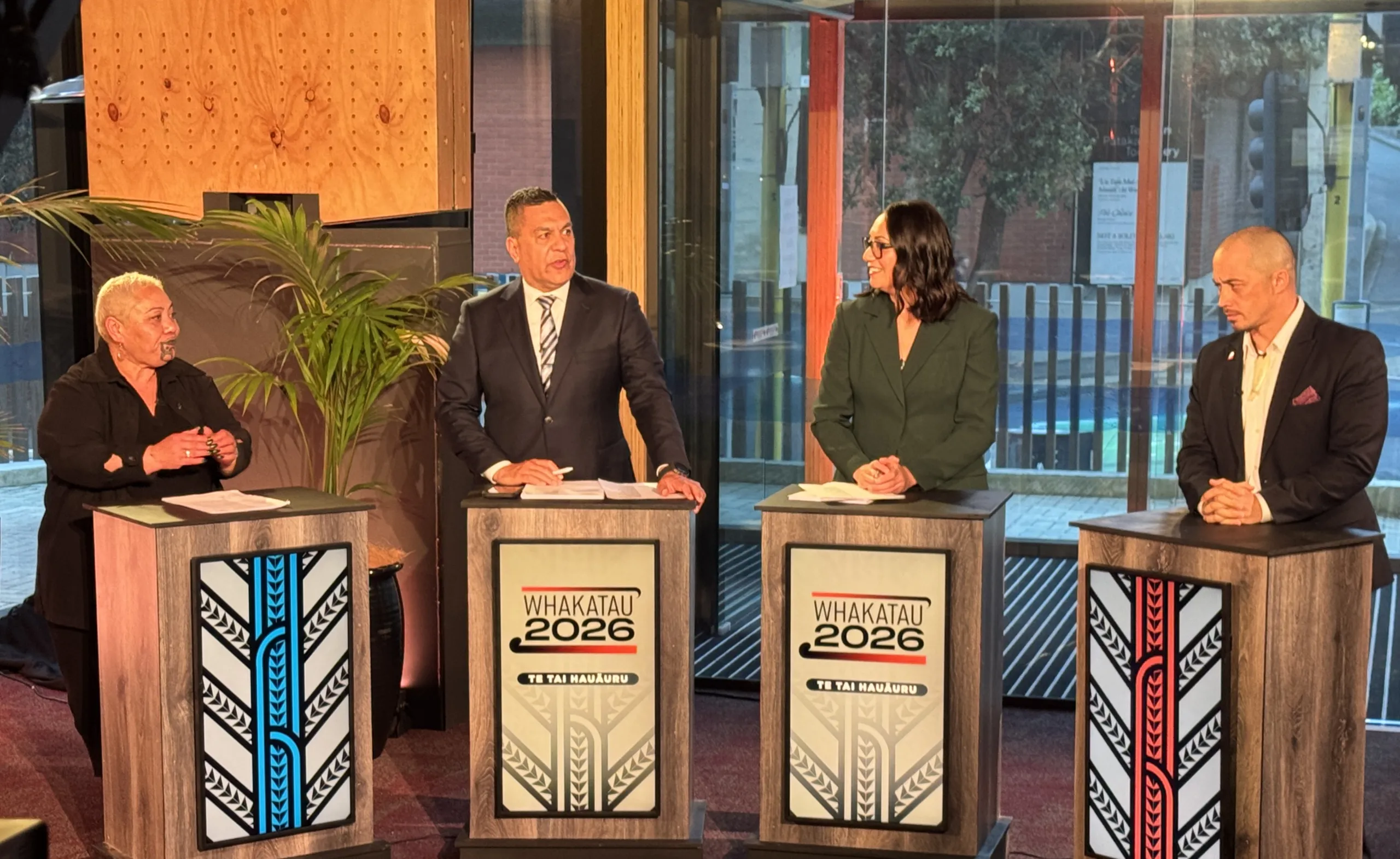

Whakaata Māori’s Te Tai Hauāuru debate brought together two of the three candidates – National’s Coral Raukawa and Labour’s Te Pūoho Kātene – following the incumbent electorate MP and Te Pāti Māori co-leader’s withdrawal due to family illness.
Both candidates opened by paying tribute to former Te Tai Hauāuru MP Adrian Rurawhe before addressing the pressing issues facing the electorate, ranging from local whānau leadership to national economic policy and constitutional rights under Te Tiriti o Waitangi.
“Big mihi out to our whānau at Whangaehu looking after our whānaunga, he’s a leader of our iwi, he was a chairperson in our iwi that signed our treaty settlement agreements, he was also a leader, you know, within our Hāhi within the church,” Coral Raukawa said.
“What do I remember of Adrian he was always there and he was very humble and always said hello cuz, I can remember at hui’s and I can get pretty verbal, you know, at our marae hui which was kei te pai because we all fought for the same thing, we all wanted the same thing,” she said.
Labour Party candidate Te Pūoho Kātene reflected on the early support he received from Adrian and his whānau and paid tribute to a humble leader..
“Well certainly from the very first meeting that we had online and the discussion both with Adrian as well as Gaylene and Walter and Christy the whānau have been just amazing and steadfast in their support of me,” Te Pūoho Katene said.
“I think in addition to showing me the ropes and how to stand on my feet in this electoral race, what I really admire about Adrian is he showed me that you don’t have to become hard in politics, that you can still maintain your integrity and your kindness and your aroha for people,” he said.
“And that you don’t have to move into that Ana o Te Raiona and become a Raiona yourself.”
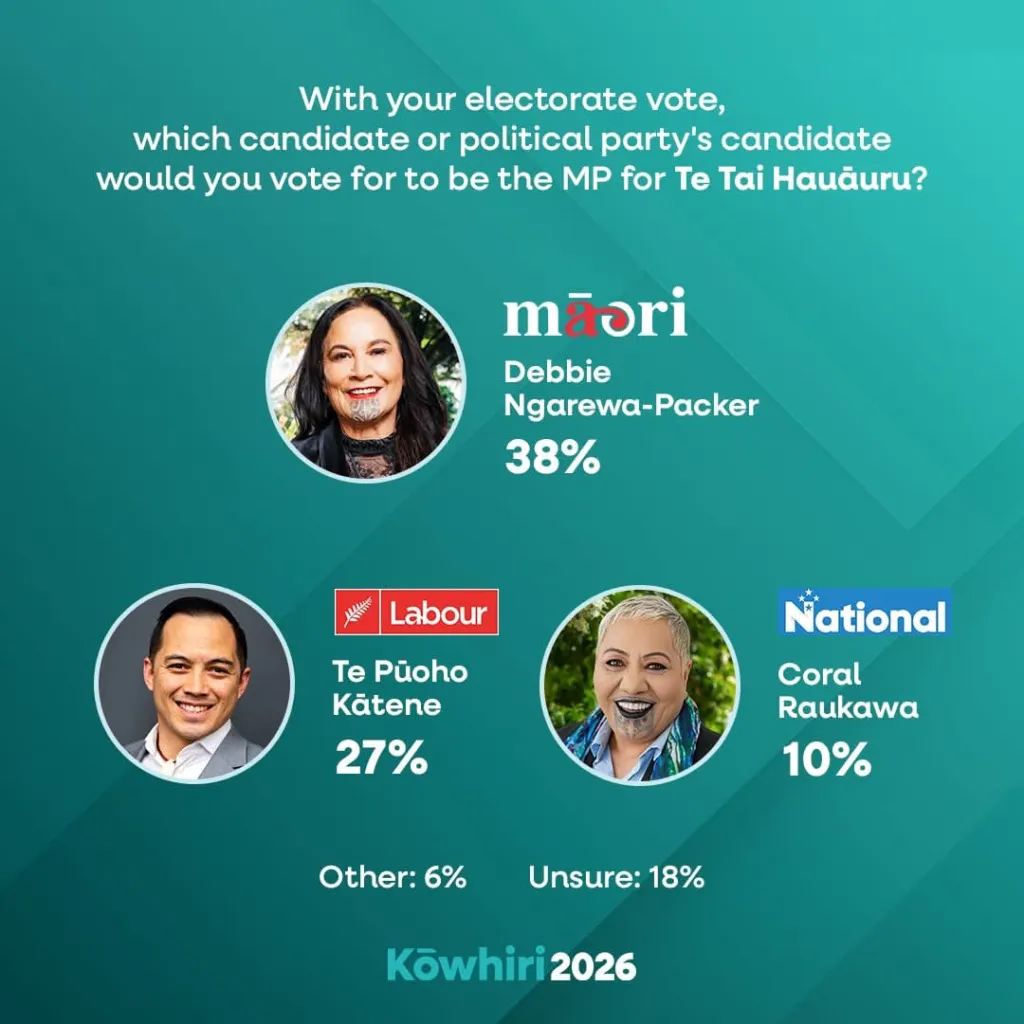
Recent Whakaata Māori polling shows Debbie Ngarewa-Packer leading the electorate at 38 percent, with Te Pūoho Kātene trailing at 27 percent and Coral Raukawa polling at 10 percent.
Both candidates then shifted to their electoral platforms, asking Te Tai Hauāuru voters to support them at the ballot box.
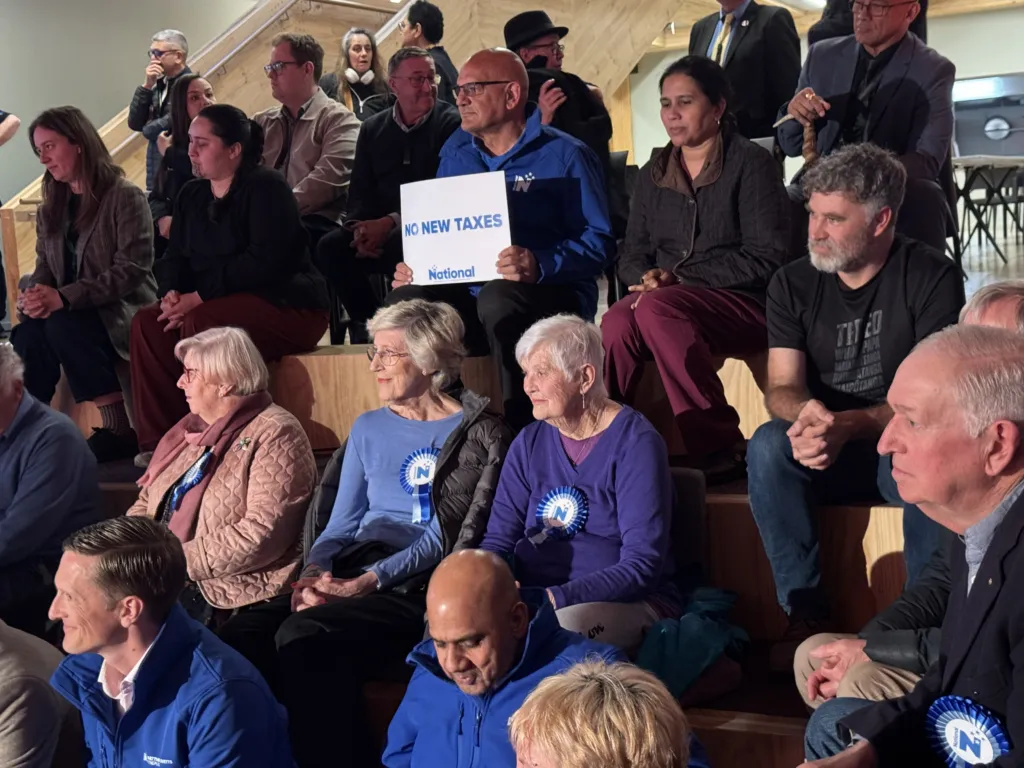
“As a Māori woman in the National Party, the candidate for Te Taihauāuru I’m asking for your vote, I’m asking for your party vote, I’m asking that you look at National, look at what they have done, look at the economy that’s growing, look at the books that are imbalanced at the moment we’re going to be in the surplus soon and also look at the fact that we will have no more, no new taxes,” Coral said.
Directly addressing the political landscape, Kātene framed the election as a crucial turning point for representation and government direction.
“The best way to guarantee changing this government and having Te Taihauāuru voice at the decision-making table is to vote for me and to vote for party labour. Two ticks.”

Academic and analytical perspectives
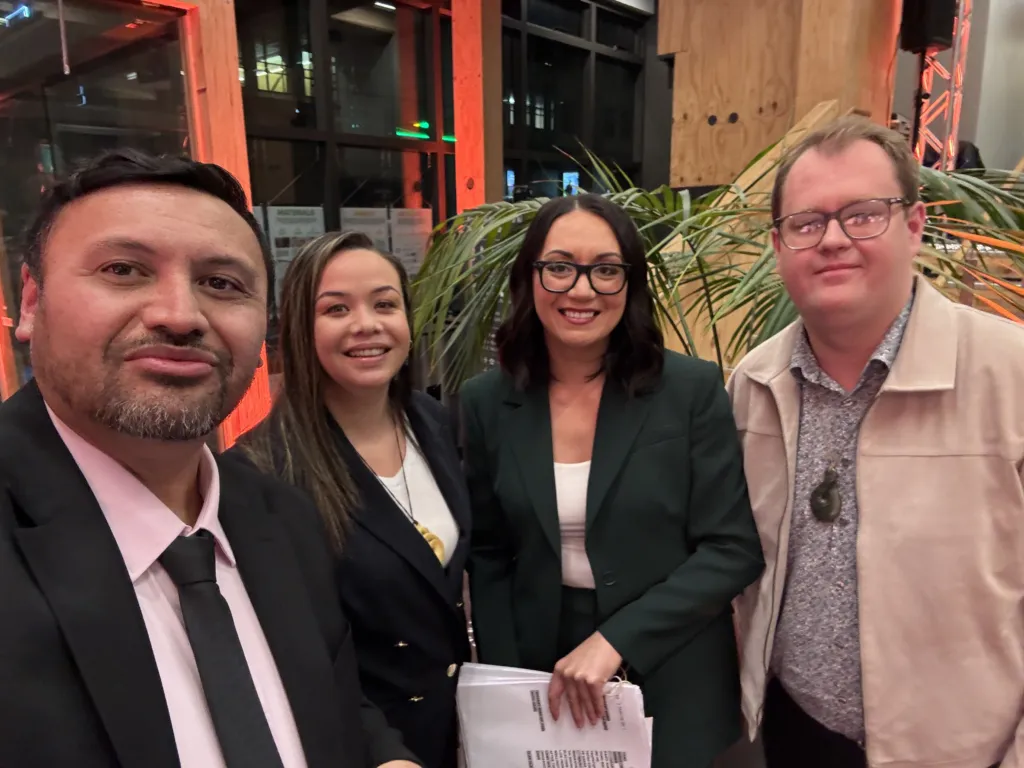
Providing broader analytical context, Taiuru Supervising producer Roihana Nuri hosted a commentary panel off the back of the debate being held at Victoria University.
Dr Annie Te One, Tumuaki at Te Kawa a Māui, raised critical questions regarding systemic challenges such as homelessness, Treaty discourse, and economic messaging.
“So I was really interested in how they would consider homelessness within the whole ecosystem of challenges we have in relation to colonial harms,” Dr Annie said.
“We really have to be clear as voters what is the language that these candidates are using to talk about Te Tiriti o Waitangi cause it’s not enough just to suggest an ongoing conversation.”
Furthermore, she noted that economic slogans alone may fail to resonate with Māori voters without comprehensive structural expansion.
“I think I would have liked a little more expansion on what that looked like. I think just saying no new taxes is not enough for voters to kind of buy into.
Offering a sharp critique of the incumbent administration, former Greens candidate Jack McDonald pointed to housing pressures and legislative approaches.
“Not under this current government. We’re not. We have one of the highest rates of homelessness in the developed world and this government is trying to criminalise it as a solution. It’s just, It’s just ridiculous,” Jack said.
“Over the last three years, National has waged an unrelenting assault on Te Tiriti o Waitangi and on Kaupapa Māori. Ever since Christopher Luxon was elected leader when they went after co-governance three waters and Nanaia Mahuta, they have led a racist attack against our people and you know, we’ve seen our people resist again that and quite rightly so,” he said.
Concluding his assessment, McDonald echoed concerns over the cost of living under current leadership.
“I think that Te Pūoho is really smart to point out that Christopher Luxon campaigned on taxing the cost of living, but instead he’s made the cost of living worse. He’s driven up costs, he’s cut income support programs and people are struggling.”