
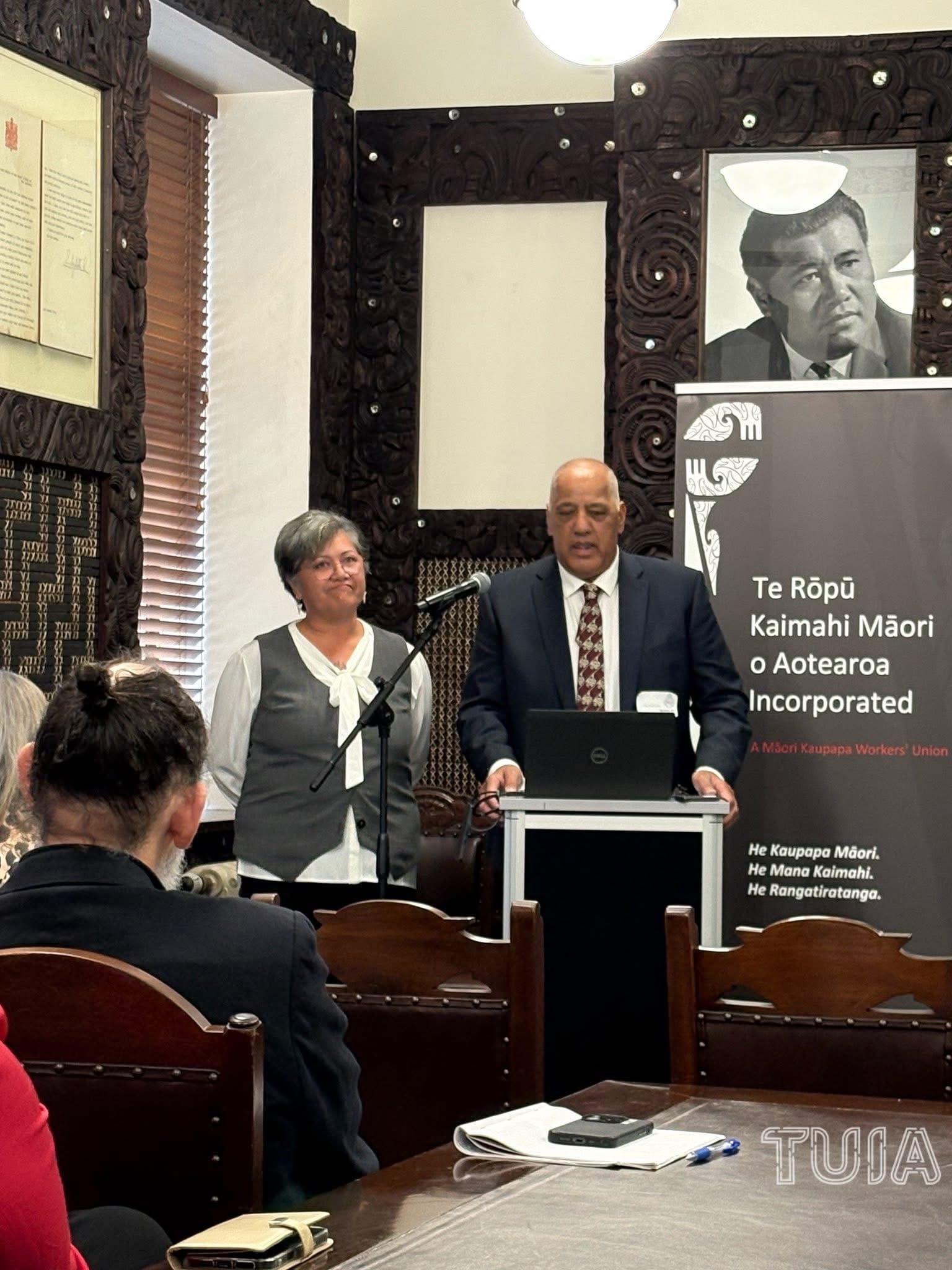

Na Raihania, spokesperson for the National Iwi Chairs Forum, has launched a blistering attack on the government’s Budget 2026, labelling its approach to Māori employment a form of “economic apartheid”.
The scathing condemnation follows the release of Budget 2026, which the Iwi Chairs Forum and Te Rōpū Kaimahi Māori o Aotearoa say confirms the Government’s indifference to a Māori employment crisis that has wiped out a decade of progress.
“We are angry at the systematic dismantling of structures that support whānau and hapū, and that’s all this is,” Raihania said. “We need to call that out for what it is. It’s economic apartheid. It’s taking the lifeblood out of our whānau to be whānau. And that’s serious folks. I don’t say this lightly, but someone has to”.
The joint statement highlighted that Māori unemployment has nearly doubled in four years, rising from a historic low of 6.3 percent in 2022 to 11.5 percent today. More than 52,000 Māori are now out of work, with close to one in four rangatahi Māori who want work unable to find it.
The groups argue that the crisis is a direct consequence of the systematic removal of programs designed to support Māori into work, noting that unemployment has risen in direct parallel with these cuts. Examples of the systematic dismantling include:
• Te Puni Kōkiri losing more than a fifth of its workforce and $18 million in baseline funding.
• MSD’s Māori communities teams being cut.
• MBIE’s Māori research pipeline being canceled.
• The Future of Work Forum being abolished.
“Māori were mentioned just once in the entire Budget speech. One word. That is this Government’s statement of intent,” Raihania stated. He challenged the government’s ‘one size fits all’ approach to lifting the economy, arguing it has failed for 40 years and is driving rangatahi to Australia.
The National Iwi Chairs Forum and Te Rōpū Kaimahi Māori o Aotearoa are demanding an emergency taskforce and a 100-day plan for Māori employment, grounded in Māori leadership and accountability. This includes rebuilding rangatahi employment pathways and embedding Te Tiriti obligations into employment law.
Amokura Panoho, Acting President of Te Rōpū Kaimahi Māori o Aotearoa, also warned that without Treaty-grounded protections, the rise of Artificial Intelligence will deepen the inequities Māori workers already face, as they are among those most exposed to economic restructuring.