
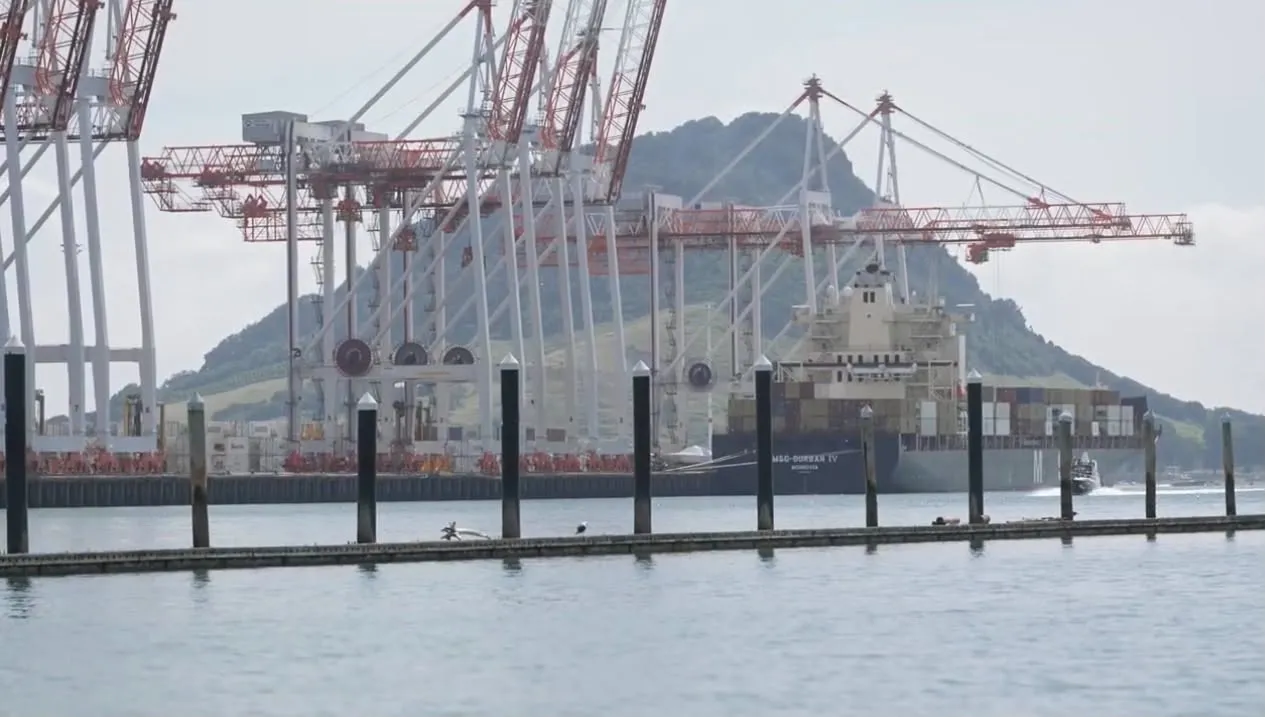

The Port of Tauranga has secured fast-track approval for its Stella Passage Development, with an expert panel imposing an extensive mitigation package intended to address the project’s effects on Tauranga Moana iwi and hapū.
The decision, issued today, allows the port to extend its Sulphur Point and Mount Maunganui wharves, reclaim about 3.58 hectares of the coastal marine area and dredge 1.5 million cubic metres from Stella Passage. Four new cranes are also proposed.
The panel accepted the development would have significant cumulative cultural effects when considered alongside decades of reclamation, dredging and industrialisation within Te Awanui.
Tangata whenua told the panel the harbour was an ancestral living environment embodying whakapapa, identity and an intergenerational responsibility to protect its mauri.
Late last month Chairman of the Ngāi Te Rangi Settlement Trust, Dr Charlie Tawhiao, rejected the then ‘draft approval’ of the Stella Passage application.
“Tangata whenua must hold enforceable authority over cultural monitoring, environmental thresholds, restoration funding and suspension of harmful activity. Stage Two must not commence unless independent evidence, endorsed by mana whenua, confirms Stage One caused no unacceptable harm.” he said.
While the panel found those cultural effects weighed against approval, it concluded they could be addressed through strengthened consent conditions covering mitigation, restoration, monitoring and tangata whenua participation.
The package includes more than $6 million in one-off payments, funds and an annual payment. Among the measures is a $250,000 contribution towards a Mātauranga Māori State of the Environment report for the Port Zone, to be prepared through a new Stella Passage Development Advisory Group. Further contributions may be required following a review.
The advisory group will set its own operating protocols and provide a formal channel for iwi and hapū participation. Conditions also provide for annual engagement with the port’s chief executive and board, access to project information and escalation to an independent mediator where concerns cannot be resolved.
Cultural monitors nominated through the advisory group and the Tauranga Moana Iwi Customary Fisheries Trust will be able to participate during capital and maintenance dredging. Tangata whenua will also have opportunities to conduct cultural ceremonies, contribute to management plans and incorporate mātauranga Māori into environmental monitoring.
Separate relationship agreements are intended to strengthen direct engagement between the port and affected iwi and hapū, while funding will support the investigation and development of avifauna habitat enhancement around Te Awanui.
However, several tangata whenua groups maintained their opposition. Ngāti Kuku Hapū Trust and Whareroa Marae sought the project’s refusal, while the customary fisheries trust said the conditions did not adequately respond to the harbour’s cumulative degradation.
The panel declined requests for additional funding, a formal apology from the port and completion of cultural baseline monitoring before work begins. It acknowledged the conditions would not remedy every historical impact on Te Awanui but found they were sufficient to prevent unacceptable additional degradation.
Port of Tauranga chief financial officer Simon Kebbell said the approval was “very welcome news”.
“The Stella Passage development is vital strategic infrastructure to support future freight growth for New Zealand. It will improve the resilience and efficiency of the international supply chain and lower costs for importers and exporters,” he said.