
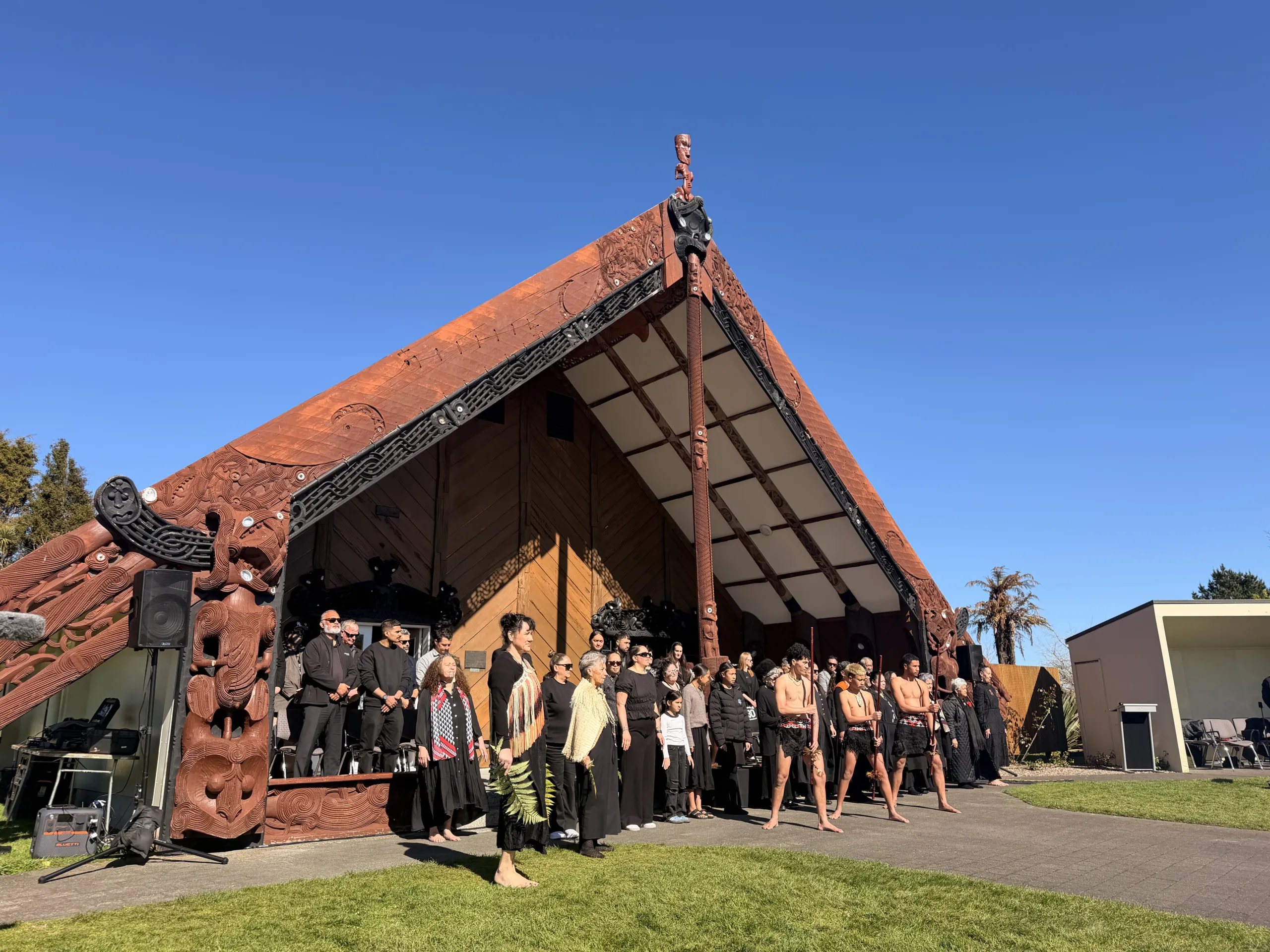

Tangatarua Marae has marked 30 years since the official opening of Ihenga, its ancestral house, with a celebration honouring the people, history and cultural traditions that have shaped the marae.
Manuhiri gathered at the Mokoia Campus for a pōwhiri to commemorate the milestone and reflect on the significance of the marae, which was opened in 1996 following years of efforts to establish a marae at Whare Takiūra.
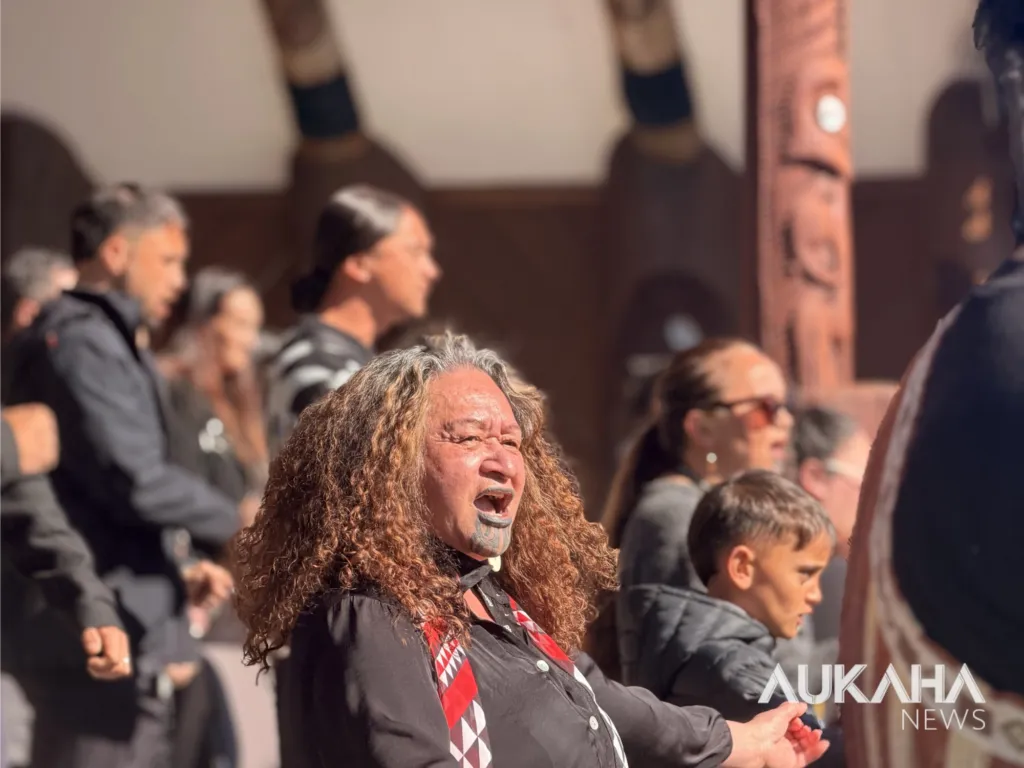
Among those returning for the occasion was renowned weaver Christina Wirihana, who created the woven elements of Ihenga and was a teacher at the time of its opening.
“Just yesterday I pulled out the photo album of the opening of Ihenga. It made me think about all the people that aren’t here today, but when I looked at the album, they were here – present.”
Wirihana also reflected on the significance of her role at the institution, saying she was the first female weaver employed at an institution.
“Malcom Murcher he was the CEO here and he employed me. At that time of that employment I was the first female weaver employed at an institution. So, that was a milestone really.”
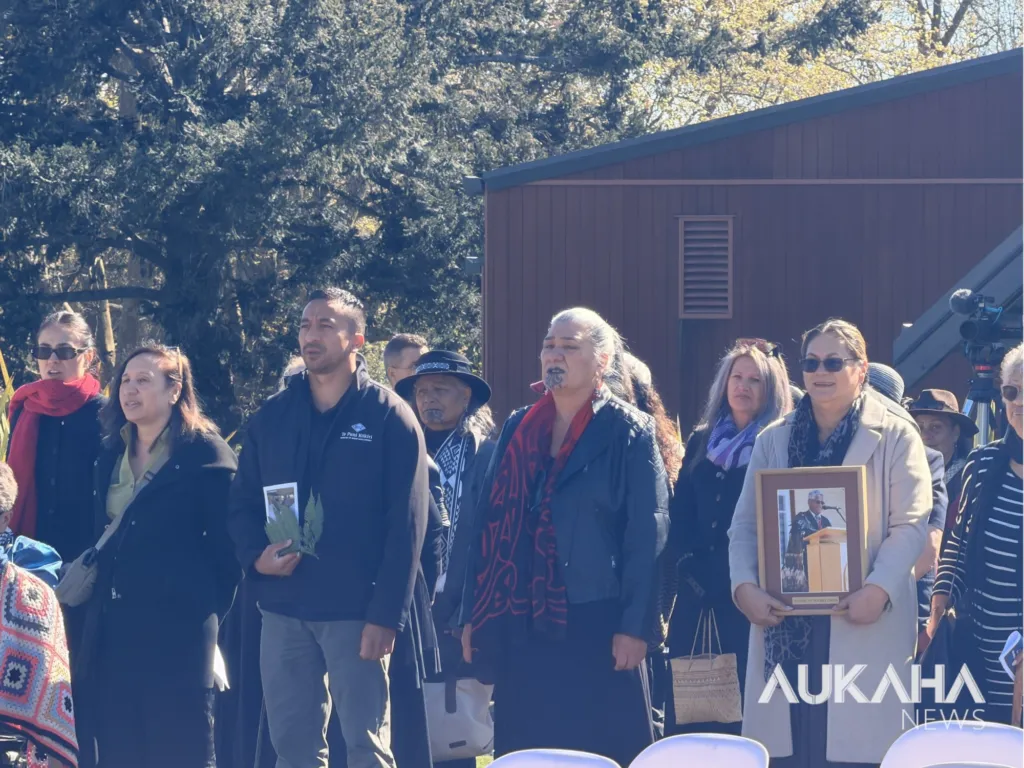
The anniversary provided an opportunity for former colleagues and whānau to reconnect and remember those involved in bringing Ihenga to life.
“The excitement of reconnecting with ourselves and saying how young we looked, listening to the kōrero, and having time to mix and mingle with friends—it’s just something that’s going to be so beautiful. It makes me feel a sense of wellness because I haven’t been well, but this to me is a healing day on a beautiful day.”
Named after the Te Arawa ancestor Ihenga, the whare continues to serve as a place of learning, culture and connection.
Wirihana says she feels a responsibility to represent the materials woven into the whare.
“I’ve given myself that responsibility of being the voice for the fibres that we manipulate that bring these beautiful forms in the whare and in this particular case through the whaariki.”
The celebrations concluded with kōrero from the families of the marae’s founders, honouring the legacy that continues to shape Tangatarua Marae today.