
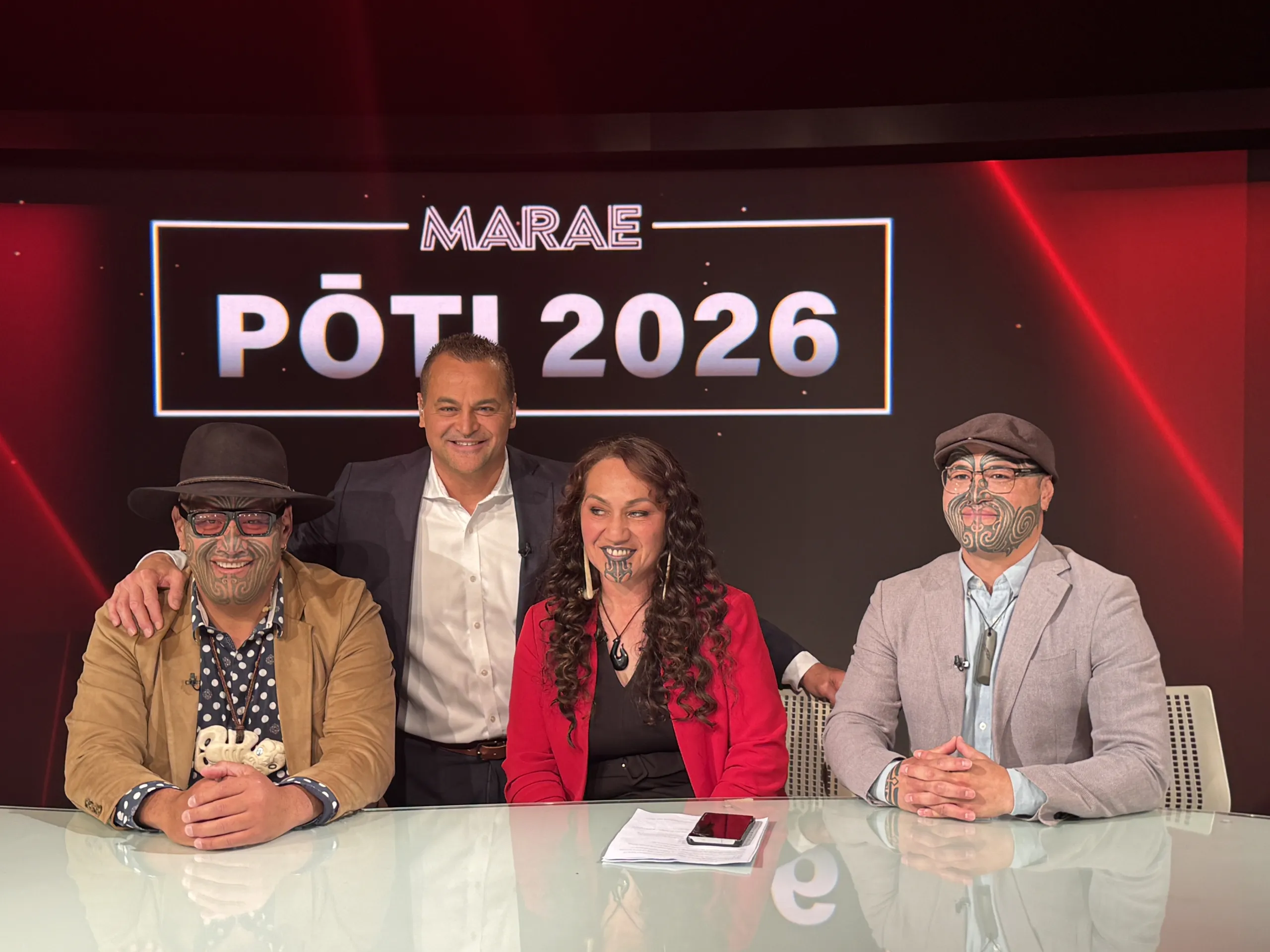


With six weeks until election day, candidates for the Waiariki electorate gathered on the Marae TV set hosted by Scotty Morrison to discuss key issues and pitch their vision to voters. Rather than a traditional fiery contest, the discussion placed a strong emphasis on whanaungatanga, kotahitanga, and community wellbeing across one of the country’s largest Māori electorates.
Te Pāti Māori candidate and sitting Waiariki MP Rawiri Waititi pointed to pressing economic and social challenges raised by voters, including housing, the cost of living, and government representation.
“Everybody was very respectful of one another, because we’re all whanaunga. Everybody wants what’s best for Waiariki,” Rawiri said.
“They can see the common thread for what everybody is trying to achieve here and what everybody wants to achieve for the Waiariki because it’s such a big electorate. Trying to get across the line for the electorate is always the hardest for anyone of the Māori seats,” he said.
In the last election Rawiri Waititi beat Labour candidate Toni Boynton by more than 15,000 votes. Labour did win the party vote clocking up 25000 party votes or more than 75 percent of the total party vote in the Waiariki.
While Toni has got the Labour nomination nod again she has a lot of ground to make up and if with her ranked at 44 on the Labour Party list she’s unlikely to even get inside Parliament.
“There’s an understanding that we’re there to look after each other. We all are standing because we have the belief of the betterment of our people,” Toni said.
“If we think this government is bad now, it will be a whole lot worse and we cannot afford another three years of National,” she said.
Fresh voices, new dynamics: How newcomers are reshaping the Waiariki race
Bringing fresh dynamics to the contest, the presence of newcomers Pāpā Wharewera of The Opportunity Party (TOP) and Green Party candidate Tania Waikato introduces a compelling new layer to the Waiariki electorate race.
Wharewera, bringing valuable local government experience to the table, deliberately reframed the political showdown into a collaborative wānanga.
Rather than engaging in traditional crossfire, he emphasised “bringing forward the good within each party” so voters can connect with shared values and aligned aspirations.
“Not really a debate, more so a waananga of bringing forward the good within each party. So that our people can find the value and align with that,” Pāpā said.
“We carry the same intentions, we’re here to serve our people and we’re here to really enact on the principles of whanaungatanga and kotahitanga,” he said.
Meanwhile, joining via remote connection, Green Party candidate Tania Waikato injected sharp policy critique into the mix, challenging corporate profits and pressing development impacts on local iwi.
“We’ll make it illegal for these greedy corporations to make billion dollars a day in extra profit, e hika mā, National talking smack this week about breaking up the supermarket duopoly,” Tania said.
And on the Tauranga Ports recent win to proceed with its Stella Passage fast track developments Tania said, “there are some major concerns about the impacts that that development will have on the iwi who have taken the brunt of that development for a really long time.”
By shifting focus toward systemic roots and long-term community pressures, both emerging candidates are ensuring the debate extends well beyond the usual two-horse race, giving voters distinct alternative visions for the region’s future.